

Want to bookmark your favourite articles and stories to read or reference later? Start your Independent Membership today.
Already a member?
Log in
The UK economy grew by 0.7 per cent between July and September, the Office for National Statistics said.
This was the strongest growth for a calendar quarter since the first three months of 2024, and follows growth of 0.5 per cent in the second quarter as the domestic economic scene continues to outperform expectation and show remarkable resilience.
The ONS said it was “almost entirely” fuelled by strength in the UK’s services sector, particularly computer programming, which grew at the fastest rate in three years.
It also pointed to evidence that businesses linked to AI adoption were boosting the sector.
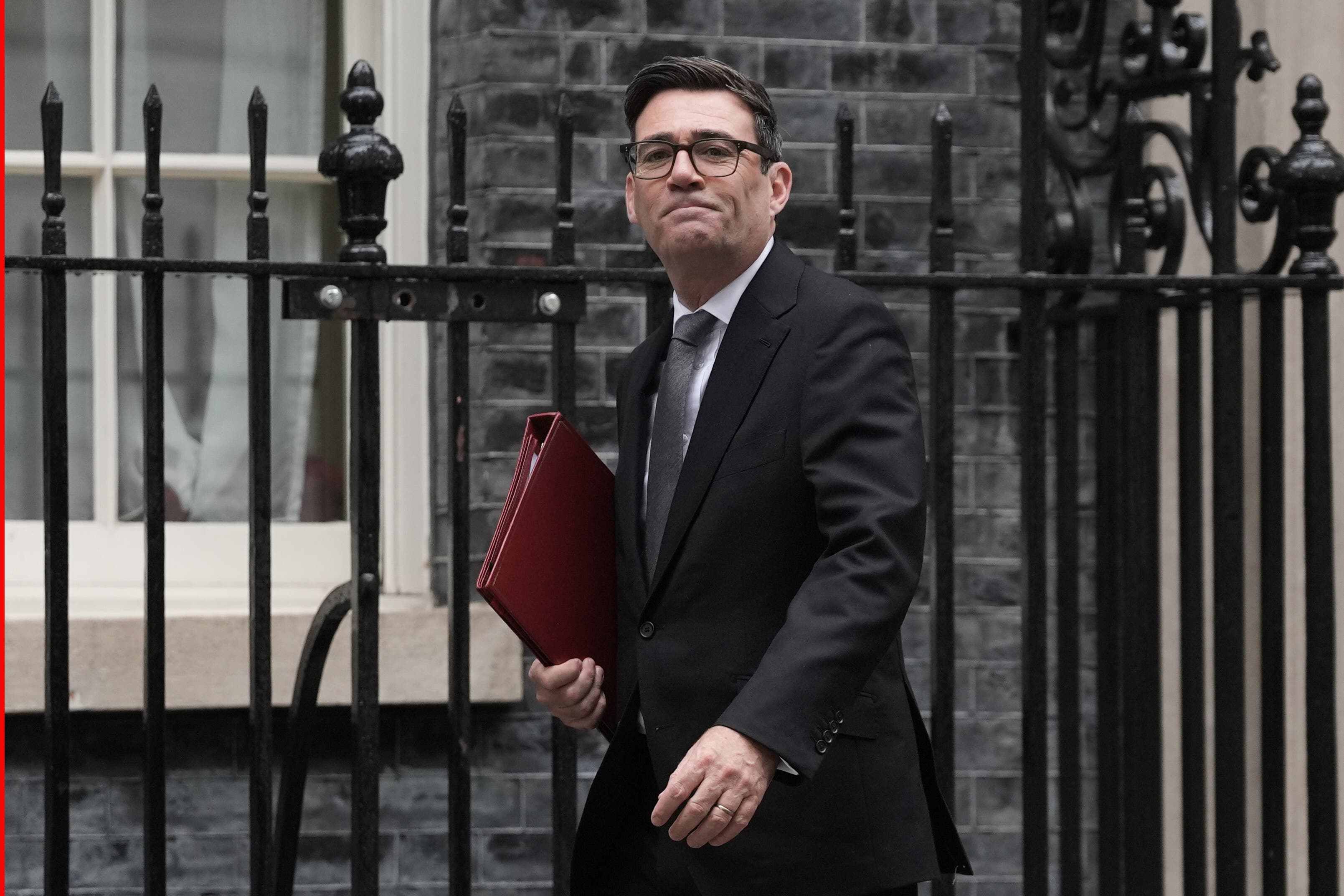
Prime Minister Andy Burnham said the data was “welcome news”.
He said: “Despite a year where events around the world have pushed up costs here at home, our economy is growing, bringing hope for the future.
“Our job now is to keep focused on what matters to people: bringing down bills, creating good jobs, helping high streets thrive and backing businesses to grow. There is more to do, but we have a clear direction.
“Giving people breathing space now while making the long-term changes needed to deliver good growth in every part of Britain.”
Chancellor John Healey added: “The Middle East conflict has hit growth worldwide, yet Britain is showing standout resilience.

Invest at least £100 in Stocks or ETFs of your choice. Get fractional shares worth £50!
Terms and conditions apply.
ADVERTISEMENT
Invest at least £100 in Stocks or ETFs of your choice. Get fractional shares worth £50!
Terms and conditions apply.
ADVERTISEMENT
“Our UK economy is growing at the fastest rate in almost 10 years, outside the pandemic. We are backing UK investment, innovation and fast growth firms. I want to bring back confidence in Britain.”
However, the British Chambers of Commerce cautioned that the growth was not coming from a vital subsection of businesses, with smaller firms still less likely to benefit from new policies or look to grow while wider economic uncertainty still looms.
“With some of the resilience built on the momentum of AI, it’s crucial that government and business work together to help every firm seize the technology moment,” said Stuart Morrison, research manager at the BCC.
“But dig below the headline and there are signs of an emerging two-speed economy. Investment by a few larger firms and sectors is driving growth. For the vast majority of SMEs, investment is flat.
“Our latest survey shows just 17 per cent of firms expect to increase invest in the coming months, unchanged on the quarter and a post-pandemic low.
“Last month’s Budget was a missed opportunity to shift the economic dial for SMEs. We need government to remain laser focused on cutting the cost of doing business, improving the hiring landscape and boosting export opportunities.”
However, a growing economy doesn’t directly translate to making peoples’ pockets feel more full, several experts have pointed out.
“The services sector, buoyed in part by artificial intelligence build out, is in rude health. But construction is weak and parts of the consumer economy such as retail, hospitality, and leisure face a more challenging backdrop as household spending comes under renewed pressure,” said Rob Morgan, chief investment analyst at Charles Stanley Direct.
“Whether the economy to be upwardly mobile rests significantly on geopolitical events that are dictating energy and fuel costs and shaping wider consumer sentiment. An impending leap in energy bills is already in the pipeline for the new year, meaning the traditionally strong first quarter could see more strain.”
Trades Union Congress general secretary Paul Nowak added that “despite this good news, working people across the country are still up against it today as they face spiralling energy bills as a result of [Donald] Trump’s illegal was in Iran.
Meanwhile, KPMG’s chief economist, Yael Selfin, suggested the higher than expected levels of growth would come to an end in the latter part of the year.
“The UK economy delivered another solid quarter of growth, but beneath the headline numbers lies a clear divergence,” he said. “Households remain cautious as higher inflation and interest rates constrain spending, while businesses are investing strongly in AI and automation.
“We expect the economy to lose momentum in the fourth quarter and broadly flatline as higher energy prices and interest rates dampen consumer demand.”
A wider consensus outcome from the data is that the Bank of England could move interest rates higher again, earlier than originally thought.
With inflation set to stay higher in the face of elevated oil prices, the BoE could move as soon as December, and if not in February, to make a second rate hike inevitable following this month’s bump to 4 per cent.
“These robust figures help keep a December interest rate rise firmly on the table by reinforcing policymakers’ view that the economy remains resilient enough to cope with another rise in borrowing costs,” suggested Suren Thiru, ICAEW chief economist, with Kit Rees, investment strategist at Quilter, adding that the BoE was in “an unenviable position” where the moves it must make against inflation are the very ones which could kill off economic growth.
“The economy continues to show resilience but there are fears it will lose momentum just as energy-driven inflation is keeping pressure on interest rates,” she said. “A de-escalation in the Middle East would help considerably, but until then the Bank has little room for manoeuvre and thus further rises will be expected.”
Subscribe here to get the latest updates from The Independent.

