

Want to bookmark your favourite articles and stories to read or reference later? Start your Independent Membership today.
Already a member?
Log in
As I approached 40, I left my marriage and my job, with no plan for what would come next.
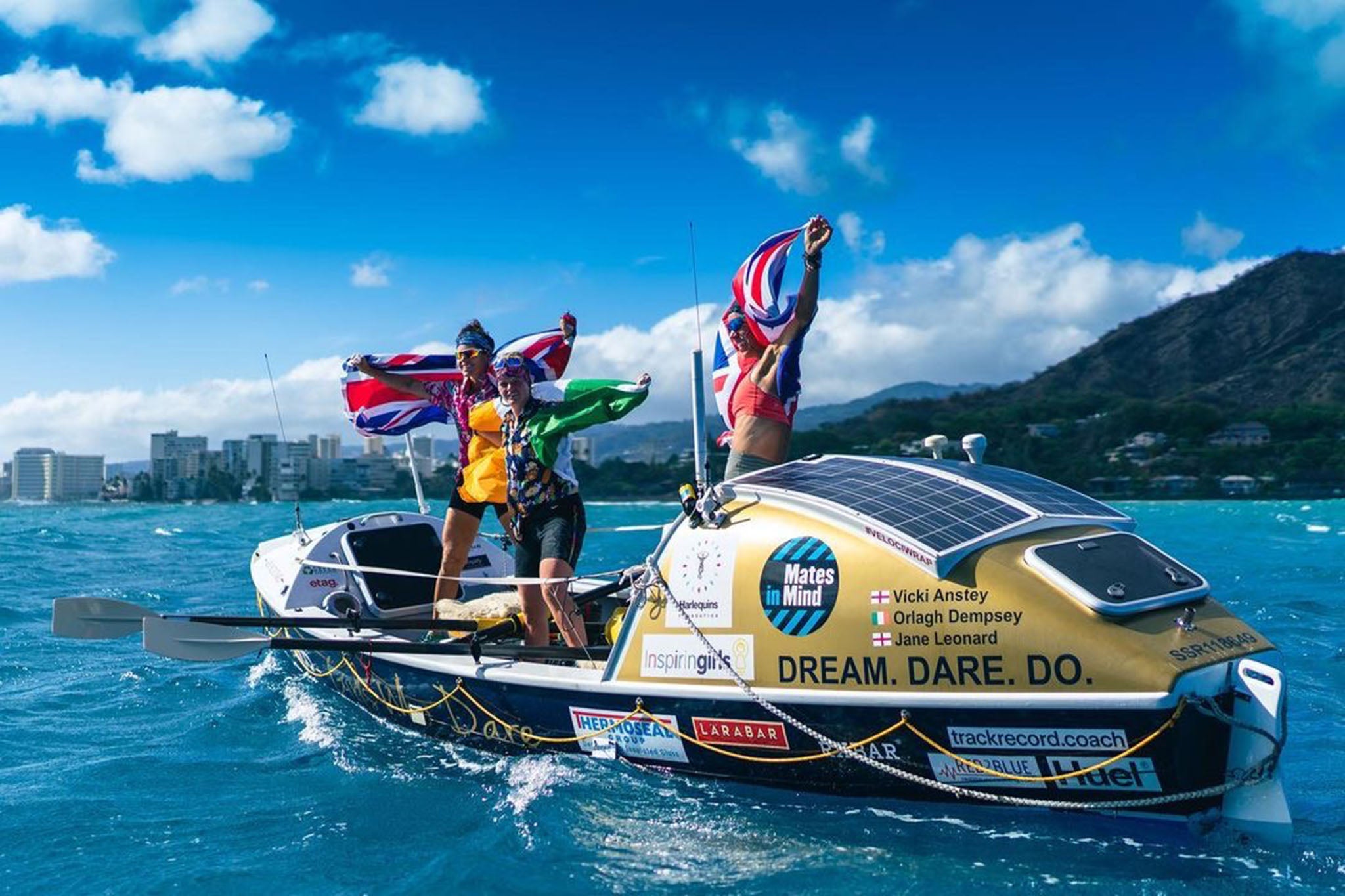
Almost a decade later, I’m preparing to row 3,000 miles across the Atlantic alongside sleep scientist Dr Sophie Bostock. And we’ve set ourselves the ambitious target of a world record that currently stands at just 38 days, 12 hours and 18 minutes.
In between, I’ve been one of the first female finalists on Channel 4’s SAS: Who Dares Wins, rowed across the Pacific, run 250km across the Arctic and set a world record cycling across America.
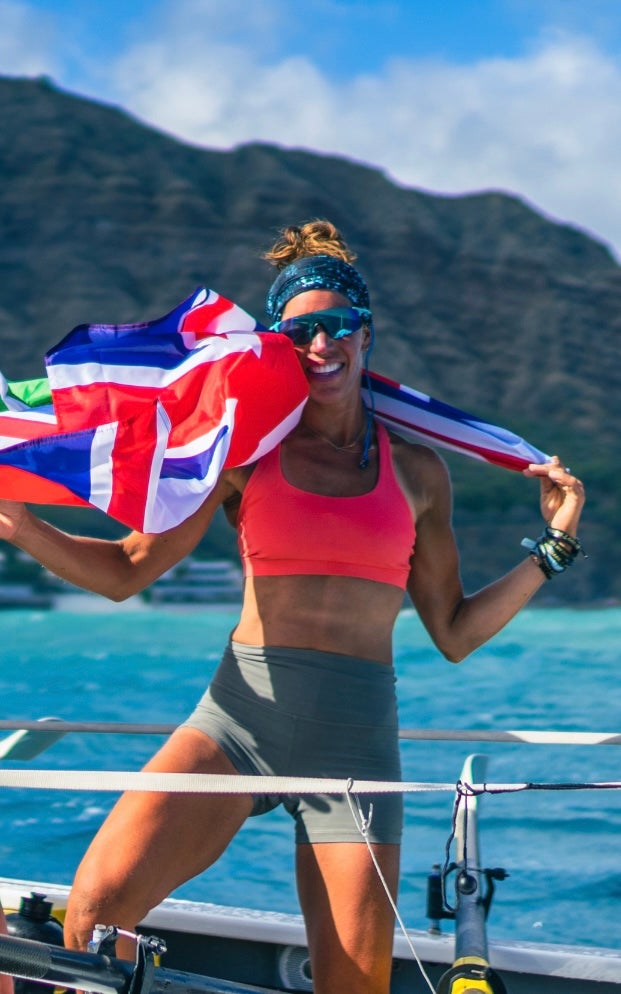
If you’d told me in my thirties that any of this was possible, I’d have laughed. Even now, I still have mornings when getting out of bed feels like an extreme sport.
These days, my preparation involves what some would call an extraordinary amount of training, monitoring and planning, but at 48, I’ve realised many of the habits which help me do the things I do are surprisingly ordinary.
In midlife, many of us question whether we’ve missed our window. Perhaps we’re less energetic than we used to be and recovery takes longer. Or the life we’ve built no longer feels right. But getting older has made me more curious about what I’m capable of.
So, here are four things I’ve learned about getting more from the body and mind I have, and why you don’t need to row an ocean to benefit from them.
Know when to push, and when to pause
For years, I thought resilience meant keeping going, whatever the cost. I was very good at getting things done, but didn’t notice what doing them was costing me. I mistook being permanently switched on for high performance.
Training for Race Across America – a 3,000-mile cycling race our four-woman team completed in six days, 19 hours and 38 minutes – changed that.
I learned about periodisation: demanding training followed by lighter periods, allowing the body to recover and grow stronger and prevent overtraining. The principle (called “supercompensation”) is simply that you can’t go hard all the time. Try a simple 15-minute strength circuit twice a week: squats, press-ups against a kitchen worktop, glute bridges and a few rows with resistance bands or dumbbells. Start with two sets of eight repetitions. The following week, try 10; the week after, 12, or a slightly heavier weight. Then, in week four, deliberately ease back: fewer repetitions, lighter resistance, more breathing space.
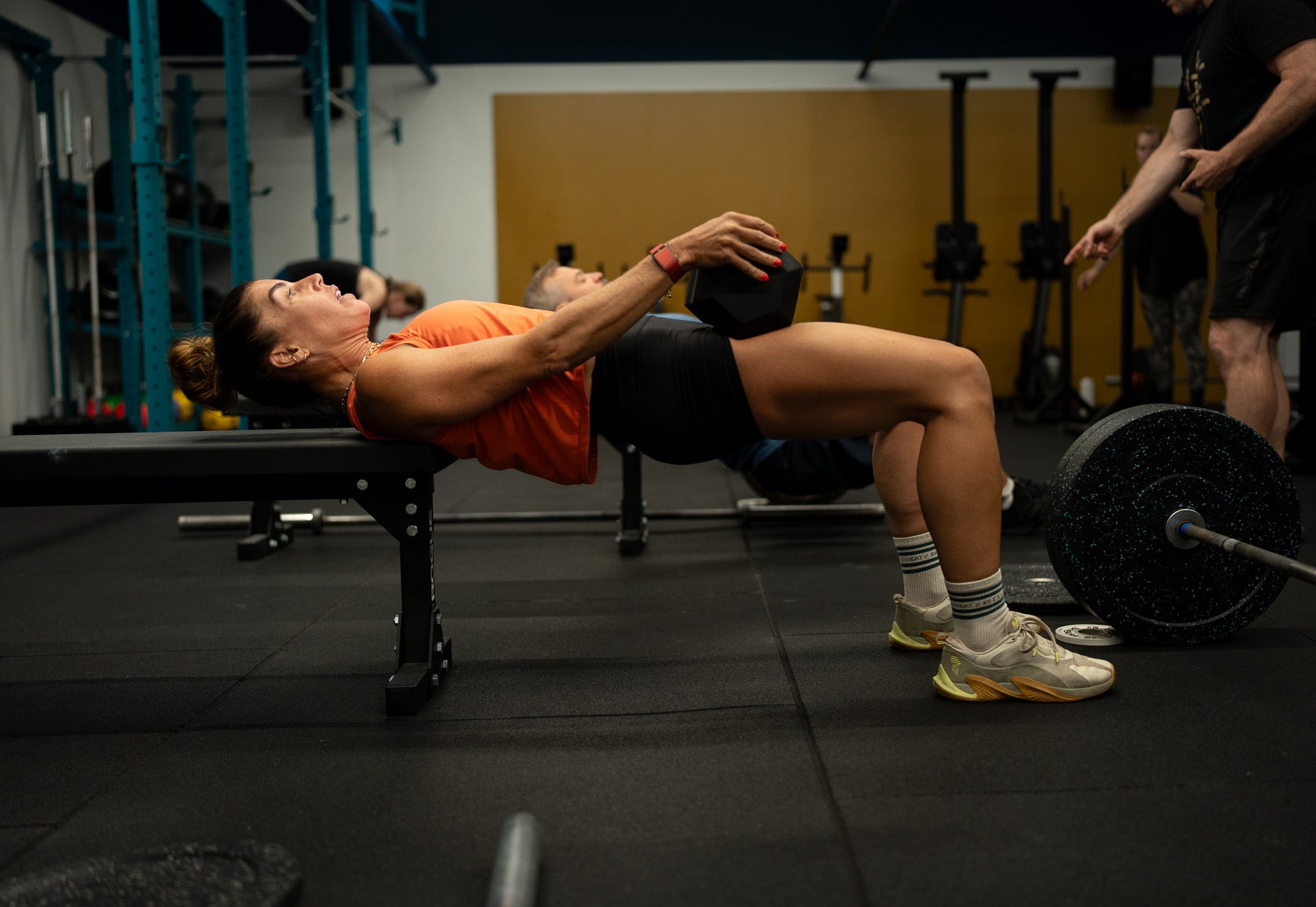
That lighter week isn’t a step backwards. It’s a chance for your body to recover and adapt to the work you’ve been asking it to do. You can apply the same approach to walking, cycling or almost any form of exercise. Build, progress, ease off, repeat. It’s a small-scale version of the way athletes structure their training, and a reminder that improvement doesn’t always come from doing more. Sometimes it comes from knowing when to do less.
Yet many of us treat everyday life like an endurance race with no finish line. We rush between commitments, eat at our desks and answer emails in bed. Recovery isn’t a reward for getting everything done. It’s what allows us to keep going. Start by building small breaks into demanding days and saying no before you’re running on empty
Face your fears
At six, I nearly drowned and spent decades terrified of deep water. Now I row oceans. But I haven’t eliminated fear; I’ve learned how to respond to it.
The physical sensations of fear and excitement can be remarkably similar: a racing heart, sweaty palms, quickened breathing. When I feel overwhelmed, I visualise a successful outcome, slow my breathing with a longer exhale than inhale, and press my feet firmly into the floor. The “physiological sigh” is one of my favourites – and rooted in a deeply embedded system of automatic regulation; sighing is something the human body does naturally and spontaneously. Deliberately using it to down-regulate under stress or pressure recreate a natural pattern to help settle the mind and body. Plus, it’s discreet and can be done anywhere, so no-one needs to know what you’re doing.
Take a deep breath in through your nose. Let your lungs fill comfortably. Before breathing out, take a second, shorter breath in through your nose. This is the little top-up breath. Then breathe out slowly through your mouth, allowing the exhale to be longer than the inhale. Repeat once or twice, or for a few comfortable cycles, until you feel calmer.
These simple techniques help me regain focus.
The same principles apply on dry land. When something frightens you, whether it’s a difficult conversation or trying something new, pause and breathe before deciding to retreat.
That doesn’t mean ignoring genuine danger. It means learning to recognise the difference between a warning that deserves attention and the discomfort of doing something unfamiliar.
It’s something I explore in my book, Other People Are Like The Weather, how much energy we waste trying to control things that were never ours to control in the first place.
We can’t always change what happens around us. But we can practise changing how we respond.
There’s something quietly radical about a woman or man in their fifties, sixties or seventies discovering they’re stronger than they thought
Resilience isn’t about tolerating unlimited pressure or eliminating fear. It’s moving with fear still present, because over time, those small acts of courage can change what you believe you’re capable of.
Lift heavy things
Thankfully, I’m not alone in beginning on my strength journey; more and more women in recent years have turned to weight training. And not just to preserve muscle mass and bone density, or improve metabolic and mental health .
There’s a particular satisfaction in picking up a weight that once seemed impossibly heavy and realising you can now lift it. It’s tangible evidence that your capabilities aren’t fixed. You can get stronger. You can learn new skills. And with consistent training, good nutrition and enough recovery, your body can continue to adapt.
In midlife, it’s easy to feel as though our physical capabilities are on a downward trajectory. Strength training offers a practical way to challenge that assumption.
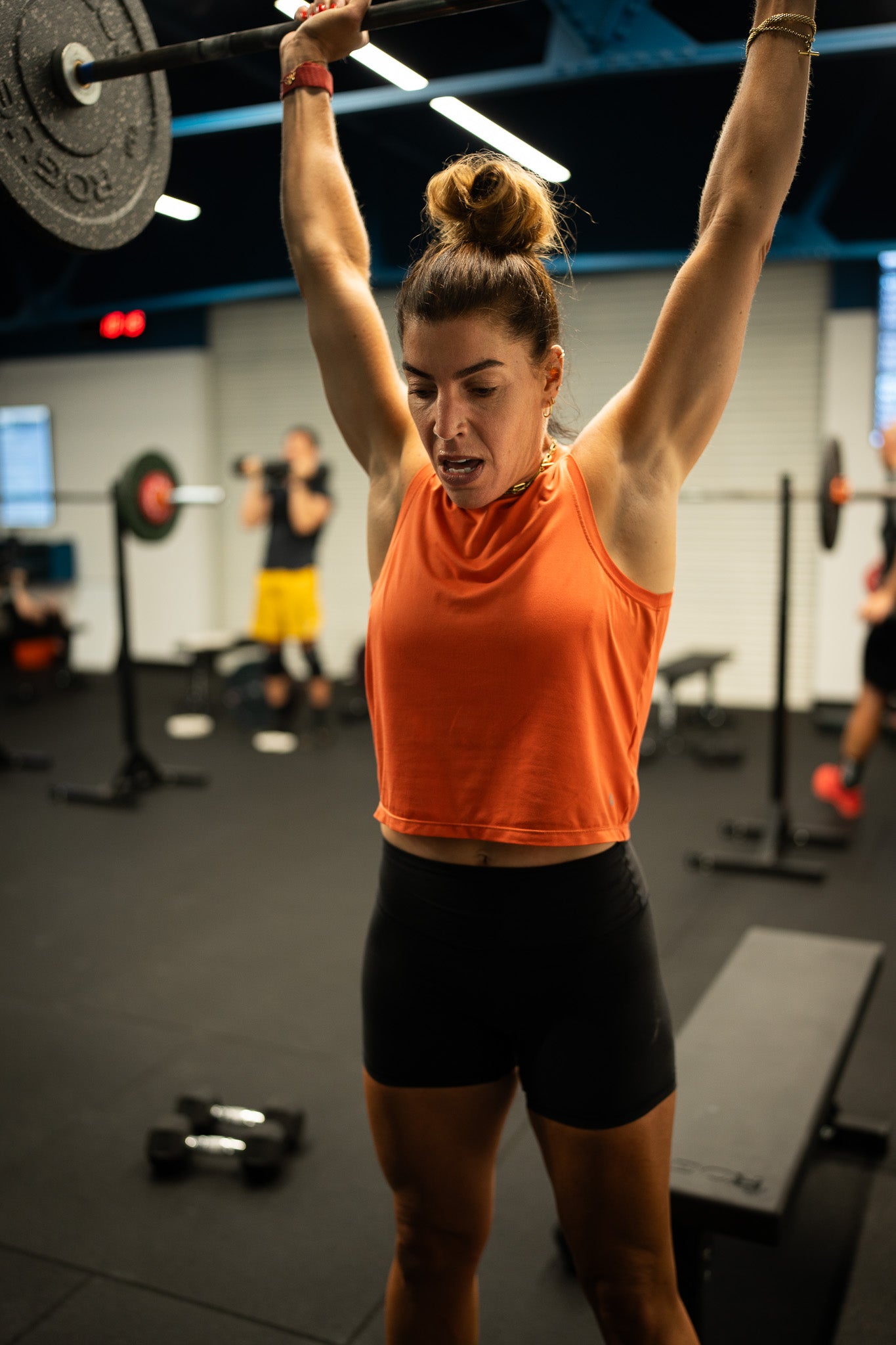
Its benefits go well beyond appearances, as maintaining muscle and strength helps us stay capable and independent as we age.
I’m not suggesting everyone needs to become a powerlifter. Start with weights you can manage safely, learn good technique and build gradually. The important thing is to challenge your muscles consistently. If you are completely new to a gym environment and don’t know your barbells from your dumbbells, think about joining a small group strength workout, or find a gym affiliated to Hyrox or Crossfit, where you will be coached safely and progressively and where everything can be scaled to your level of ability – it’s honestly not as intimidating as you think it might be.
The truth is that you have to lift a weight heavy enough to cause a progressive training effect, so you don’t need to lift anything maximal, but you do need to do more than bodyweight training, pilates, running, cycling or swimming.
There’s something quietly radical about a woman or man in their fifties, sixties or seventies discovering they’re stronger than they thought. And once you begin to see yourself as physically capable of more, it’s surprising how that confidence can spill into other areas of life.
Be informed by data – but don’t let it become the boss
I’m a big fan of data, particularly when it reveals patterns I might otherwise miss.
My trusty WHOOP tracks my sleep, activity and physiological measures associated with recovery, including heart rate variability and resting heart rate.
It even has a feature which estimates my physiological age. Apparently, mine is 12 years lower than my chronological age. Oh, to be 36 again.
Of course, it’s an estimate, not a medical measurement, and I’m under no illusion that it means I’ve actually turned back the clock. But it’s a motivating way to monitor longer-term trends. Gives you the small nudges to change your behaviour in incremental ways and also stops you from telling yourself little white “health” lies that are in fact stopping you from becoming fitter and stronger in the most effective way.
We lose around 1-2 per cent muscle mass a year after the age of 50. And it’s not just muscle size that declines, we can also lose strength at 2-5 times that rate, so we actually need to increase our training volume as we age to compensate, not take our foot off the gas.
Vicki Anstey’s book, ‘Other People Are Like The Weather’ (Northside House), is available in hardback and ebook at www.vickianstey.co.uk
Follow Vicki’s Atlantic row at www.growatlantic.team


