
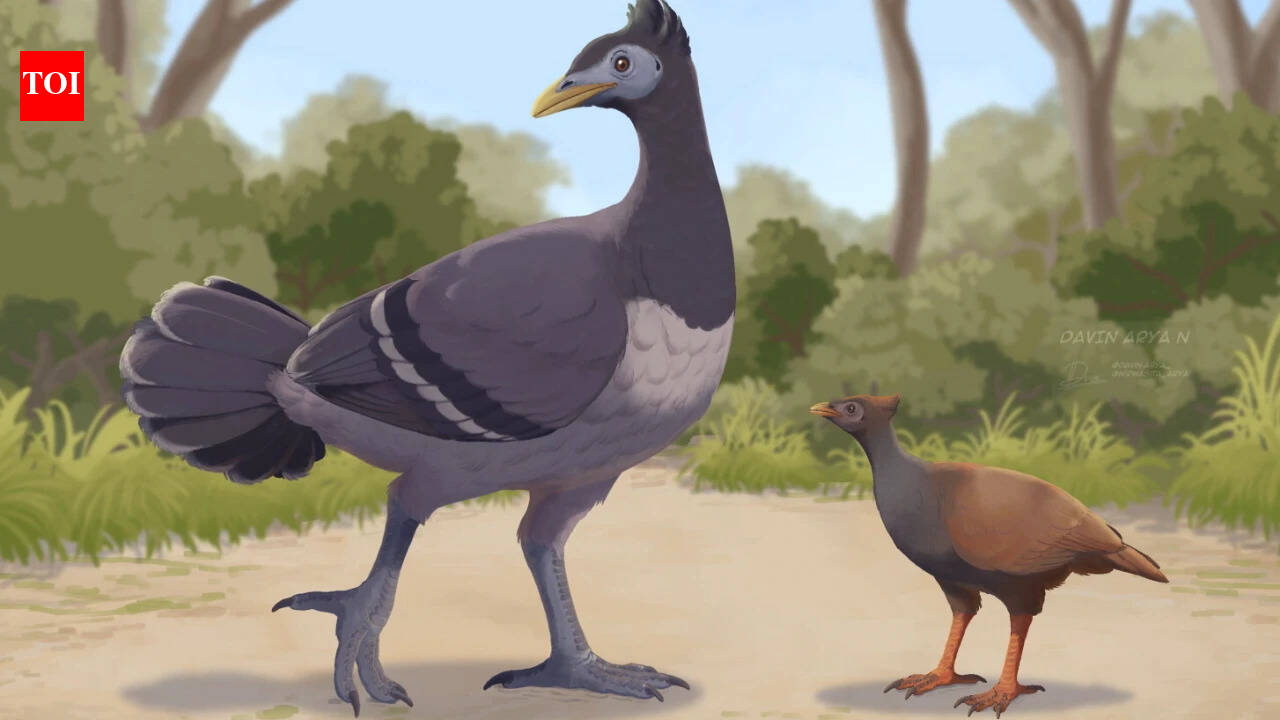
For years, a fossil leg bone lay in Liang Bua cave on Indonesia’s Flores Island. The cave is famous for the discovery of Homo floresiensis, a small human relative nicknamed the ‘hobbit’. Although researchers identified it as a bird bone, they set it aside, as studies at the time focused more on mammal remains.Now, almost 17 years later, researchers have taken a second look at the fossil. They have identified it as belonging to a new, extinct species of megapode. The ground-dwelling, chicken-like bird is the first megapode fossil ever found in Wallacea. It is also one of the largest of its kind, according to the study published in Alcheringa: An Australasian Journal of Palaeontology.“It is one of the oldest bird remains we have found at Liang Bua …,” Hanneke Meijer, a professor and curator of osteology at the University Museum of Bergen, said in a statement. “This is a period for which we have almost no data on birds … so it is exciting that we can pinpoint this species to this period.”
An ancient ground-dwelling bird
Megapodes first appeared millions of years ago, during the Late Cretaceous, likely in Australasia, before spreading to parts of Indonesia, Melanesia, the Philippines and Australia, where they are still found today, the study’s authors said.“Rather than sit on their nests, they (megapodes) lay their eggs in large mounds or burrows and then leave them there (and never look back),” Meijer said.Despite their long history, no megapode fossils had ever been found in Wallacea before this discovery. Researchers found the fossilised leg bone in the deepest layers of Liang Bua cave.The fossil remained unexplored for years until researchers began comparing it with those of living and extinct megapode species. Nothing in the comparison collections matched it. Its size and shape pointed to a large species, and the researchers concluded that it belonged to a new one.They named it Megapodius rokusi, after Rokus Due Awe, the same individual who first recognised the bones of H. floresiensis and later identified the fossil as a bird bone. “Due Awe was an incredible self-taught zooarchaeologist, and it is an honour to be able to name a species after him,” Meijer said.Researchers estimate that the bird would have weighed about 3.9 kilograms, or roughly 8.6 pounds. The only megapode living on Flores today, the orange-footed megapode, weighs between 0.5 and 1.2 kilograms. The extinct bird would therefore have far outweighed its living cousin. It is also the largest known member of its genus and the first megapode fossil found in Wallacea, the island region between mainland Asia and Australia.As scientists have found only one bone, they still know very little about the bird. The fossil does not include any wing bones, so researchers are uncertain whether the bird could fly. They also do not know when it went extinct. It may have disappeared around the same time as other animals found in Liang Bua cave, including giant storks, dwarf Stegodon, Homo floresiensis and vultures, or much earlier. Regardless, this fossil adds to what scientists know about ancient birds and shows how much remains to be discovered.“Southeast Asia is considered a biodiversity hotspot, but it is important to realise that what we see today is only a remnant of what once was,” Meijer said. The researchers also doubt whether this is the only megapode fossil in Wallacea. Since bird fossils have often been overlooked in favour of mammal bones, she believes more could still be waiting to be discovered.“I definitely think there might be more megapode fossils lying around, and I can’t wait to look at more material to find them,” Meijer concluded.


