
With the world’s most important fossil fuel supply route at a near-standstill, many advocates for wind and solar say the transition to renewable energy is about to shift to a much higher speed.
The United Nations climate chief, Simon Stiell, recently described an “immense irony” in which leaders who have “fought to keep the world hooked on fossil fuels are inadvertently supercharging the global renewables boom.”
He didn’t name President Trump, but the United States is aggressively promoting petroleum and natural gas, and its attack on Iran has led to the effective closure of the Strait of Hormuz, the route for about one-fifth of global oil trade.
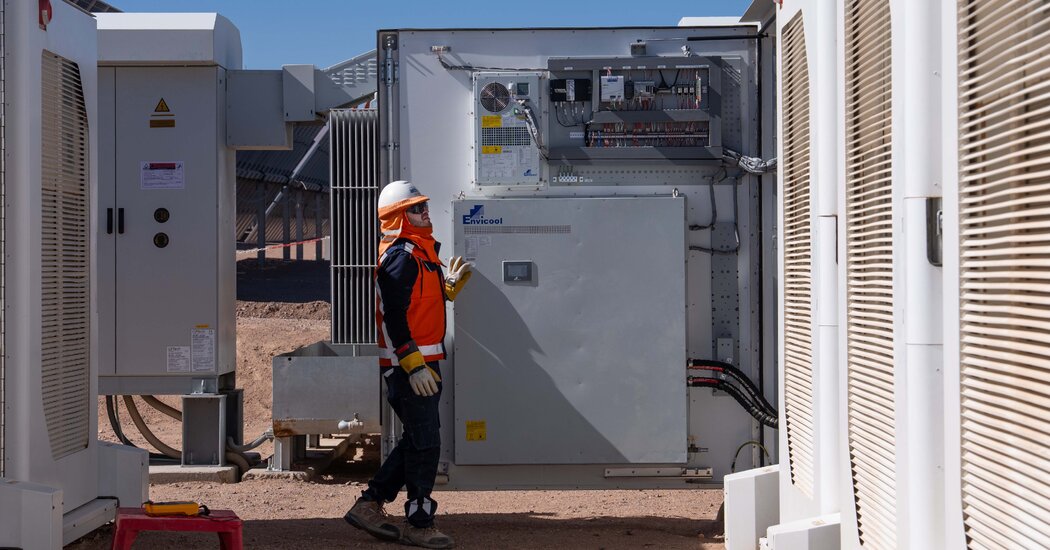
It will take time to see how fully Mr. Stiell’s prediction plays out. But a report on Wednesday underlines one reason for the sentiment: At a time when oil and gas supply is faltering, the cost of wind and solar energy keeps declining. And, when paired with battery systems for storage, renewables can often provide steady electricity more cheaply than fossil fuels, even when the sun doesn’t shine or the wind doesn’t blow.
This comes as Chinese solar panel exports broke a record in March, double the level of the previous month, with countries like Nigeria, India and Australia importing more than ever before. Analysts caution that some of the surge might have come from rush-buying before a Chinese policy change that would effectively raise prices from April onward.
But there is other evidence of a potential shift, from surging E.V. sales in Europe and Asia as well as a rise in European heat pump sales.
The Wednesday report, from the International Renewable Energy Agency, an intergovernmental organization based in Abu Dhabi, shows how a traditional weakness of solar and wind power, the intermittence, is receding amid technological leaps and cheaper batteries. The ability to maintain a predictable energy flow is particularly crucial for projects like data centers, which require a consistent supply.
“Renewables are entering this new territory,” said Francesco La Camera, director general of the renewable energy agency, which promotes clean energy worldwide. “In this case, storage will make renewables become dominant in the energy system. There is no doubt.”
That doesn’t mean renewable energy is a cure-all for a world facing an energy shock. Major wind or solar projects, even in the best scenario, take several years to come online. Some crucial industries, like aviation and cement, don’t have a ready-made alternative to fossil fuels. And many countries lack the money to carry out a “wholesale switch to their electricity system,” said Nat Bullard, an energy analyst in Singapore and the co-founder of Halcyon, an energy data company.
Still, Mr. Bullard said, “the long-run signal is pretty clear: Do everything you can to reduce your dependence on imported petroleum.”
The renewable energy agency report said that battery storage costs had fallen 93 percent since 2010, opening the door for projects in parts of the world with either prevalent sunshine or strong wind. China has the lowest solar costs of any country, with some projects delivering electricity at half the expense of gas. Even in a country with abundant and cheap fossil fuels, like Saudi Arabia, solar can deliver near-continuous electricity at a cost that is increasingly competitive with fossil fuels, the report said.
Costs in the United States for wind and solar have fallen over the last five years, but remain higher than in many other countries. Mr. La Camera said this is because of structural issues in the grid, as well as tariffs put in place by President Trump and slow permitting.
“What is at stake with the United States is, do they want to remain competitive or not?” Mr. La Camera said. “Because if the other producers are at a lower cost than the U.S., then the economy of the U.S. will be paralyzed.”
Taylor Rogers, a White House spokeswoman, said in a statement that “Americans overwhelmingly voted for President Trump to unleash reliable, affordable and secure energy sources, because the Democrats’ push for so-called green energy threatened the United States’ national security and drove prices up.”
“The reality is that countries that have transitioned to renewable energy are totally dependent on other countries for oil and gas when their intermittent, costly and unreliable green energy inevitably fails,” Ms. Rogers said.
The Trump administration announced in January that it was withdrawing from the International Renewable Energy Agency.
Dave Jones, the co-founder of the energy research organization Ember, said that battery and storage systems have transformed so quickly that “everybody is trying to catch up with how much it has fundamentally changed.” Over the last few years, engineers have made changes to significantly reduce fire risk and extend the life span of the technology. And this is all happening as the cost of oil and liquefied natural gas rise.
“So the economics of clean tech versus fossil fuels have received a huge super-boost,” Mr. Jones said.

