
The World Health Organization said Tuesday it believes there was rare human-to-human transmission of the hantavirus on a cruise ship at the center of the outbreak, with three people now dead after coming down with the illness.
“We do believe that there may be some human-to-human transmission that’s happening among the really close contacts [on board],” Maria Van Kerkhove, an epidemiologist with the WHO, said at a press conference Tuesday. “The husband and wife, people who’ve shared cabins, etc. So, again, our assumption is that has happened.”
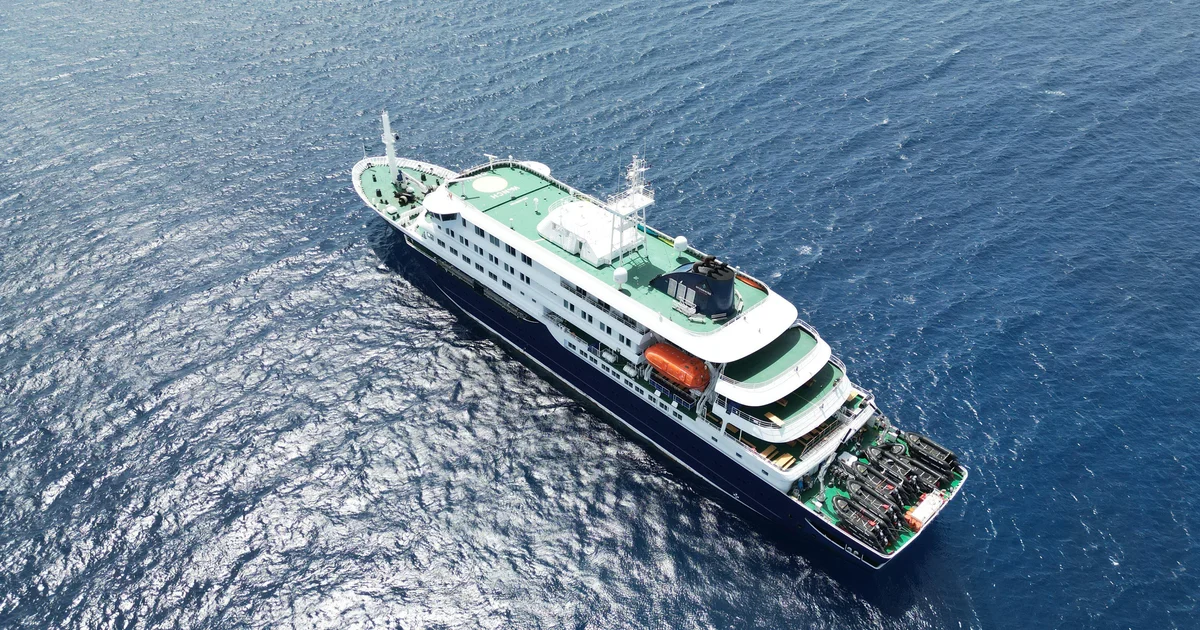
MV Hondius, a Dutch ship with nearly 150 people aboard, had been awaiting help off the coast of Cape Verde in the Atlantic Ocean after the African island refused to let it dock over public health concerns. However, the Spanish government said Tuesday the ship could sail to the Canary Islands for a “full investigation” and “full disinfection.”
Besides the three fatalities — two of whom died on board and a third who died shortly after disembarking — there are four other suspected or confirmed cases of the virus, one of whom is a British national who was evacuated from the boat and is now in intensive care in South Africa, according to the WHO.
AFP via Getty Images
Hantavirus is typically spread by contact with rodents or their urine, saliva or droppings, but the WHO said that while it is rare, the Andes strain of the hantavirus may spread between people. The agency believes the virus has been passed from person to person on the stricken ship, which was on a weekslong polar cruise from Argentina to Antarctica and several isolated islands in the South Atlantic. When humans catch the virus, it has a mortality rate of up to 50%.
Van Kerkhove, the WHO’s epidemic and pandemic preparedness and prevention director, told journalists on Tuesday that Spanish authorities “have said that they will welcome the ship to do a full investigation, a full epidemiologic investigation, full disinfection of the ship and of course … assess the risk of the passengers that are actually on board.”
The Spanish Ministry of Health told CBS News its epidemiologists would conduct a review of the ship Tuesday afternoon.
“This intervention is intended to assess the condition of the people on board, determine whether there are more individuals with symptoms, and identify any high-risk or low-risk contacts,” the ministry said in a statement. “This will help inform decisions regarding repatriation processes and the ship’s route.”
Passengers face possible eight-week quarantine
Ann Lindstrand, the WHO’s representative in Cape Verde, told CBS News’ Ramy Inocencio on Tuesday that there is no risk of a pandemic-level threat with the hantavirus, given the low likelihood of human-to-human transmission.
She confirmed three people would be medically evacuated to the Netherlands sometime on Tuesday, adding the condition of the patients was “reassuring.” They are recovering and are stable, having been attended to by medical teams from Cape Verde on the vessel in the last few days, she said.
She said Spanish and Dutch authorities are “intensely discussing” what will happen next to the passengers on board, who have been told to remain in their cabins as much as possible.
“If there is the need for a quarantine, that will be a decision of the health authorities in Spain or Holland at that point in time, with the close collaboration with the advice of WHO,” Lindstrand said.
The quarantine, if necessary, could be as much as two months, since the incubation period for hantavirus is between one and eight weeks, she said, adding, “eight weeks in a horribly long time to be in quarantine.” Lindstrand said she is in touch with a volunteer doctor on the boat who told her passengers were “coping surprisingly well,” though they are anxious to know their next port of call.
AFP via Getty Images 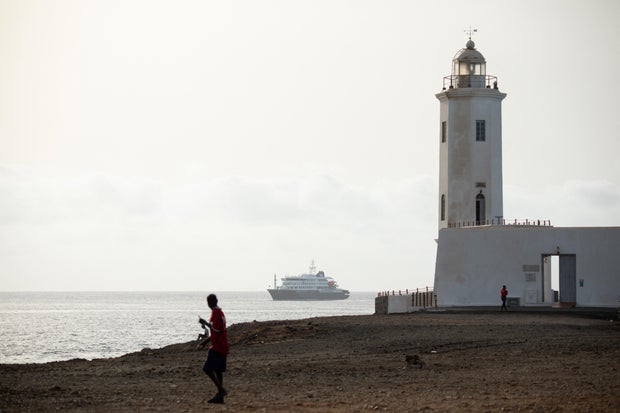
Detailed investigations ongoing
The WHO said it was working with local authorities and Oceanwide on a “full public health risk assessment.” It was unclear how the outbreak could have started.
“Detailed investigations are ongoing, including further laboratory testing, and epidemiological investigations,” WHO said. “Medical care and support are being provided to passengers and crew.”
The British man evacuated to South Africa on April 27 tested positive for the virus and is in critical condition, authorities said.
The body of one of the passengers who died, a German national, remains on the ship, according to an Oceanwide Expeditions statement. A 70-year-old Dutch man died on board April 11, and his 69-year-old wife died later in South Africa after leaving the ship, officials said. Her blood later tested positive for the virus, South Africa’s health minister said.
The WHO has also begun tracking down people who shared a flight with the 69-year-old passenger. The Dutch woman got off the boat with “gastrointestinal symptoms” on April 24 and died two days later, after her condition “deteriorated during a flight to Johannesburg,” the WHO said. “Contact tracing for passengers on the flight has been initiated,” it added.
Among the 87 remaining passengers, 17 are Americans, 19 are from the U.K. and 13 from Spain, according to Oceanwide Expeditions. Sixty-one crew members also are onboard.
The ship left Ushuaia in southern Argentina on April 1, according to Argentine provincial authorities. Health officials there said they confirmed no passengers had hantavirus symptoms when the Hondius departed.
But because symptoms can appear up to eight weeks after exposure, “the passengers could have been incubating the disease if they acquired it within the country or elsewhere in the world,” Juan Facundo Petrina, director of epidemiology for Tierra del Fuego province, told AP in an interview from Ushuaia.
He noted that the province hasn’t historically seen hantavirus cases, but infections have broken out in other Argentine provinces, leading to 28 deaths nationwide last year, according to the health ministry.
Oceanwide Expeditions advertises 33-night or 43-night “Atlantic Odyssey” cruises on the vessel. It has 80 cabins, a capacity of 170 passengers, and typically travels with about 70 crew members, including a doctor, the company said.

