
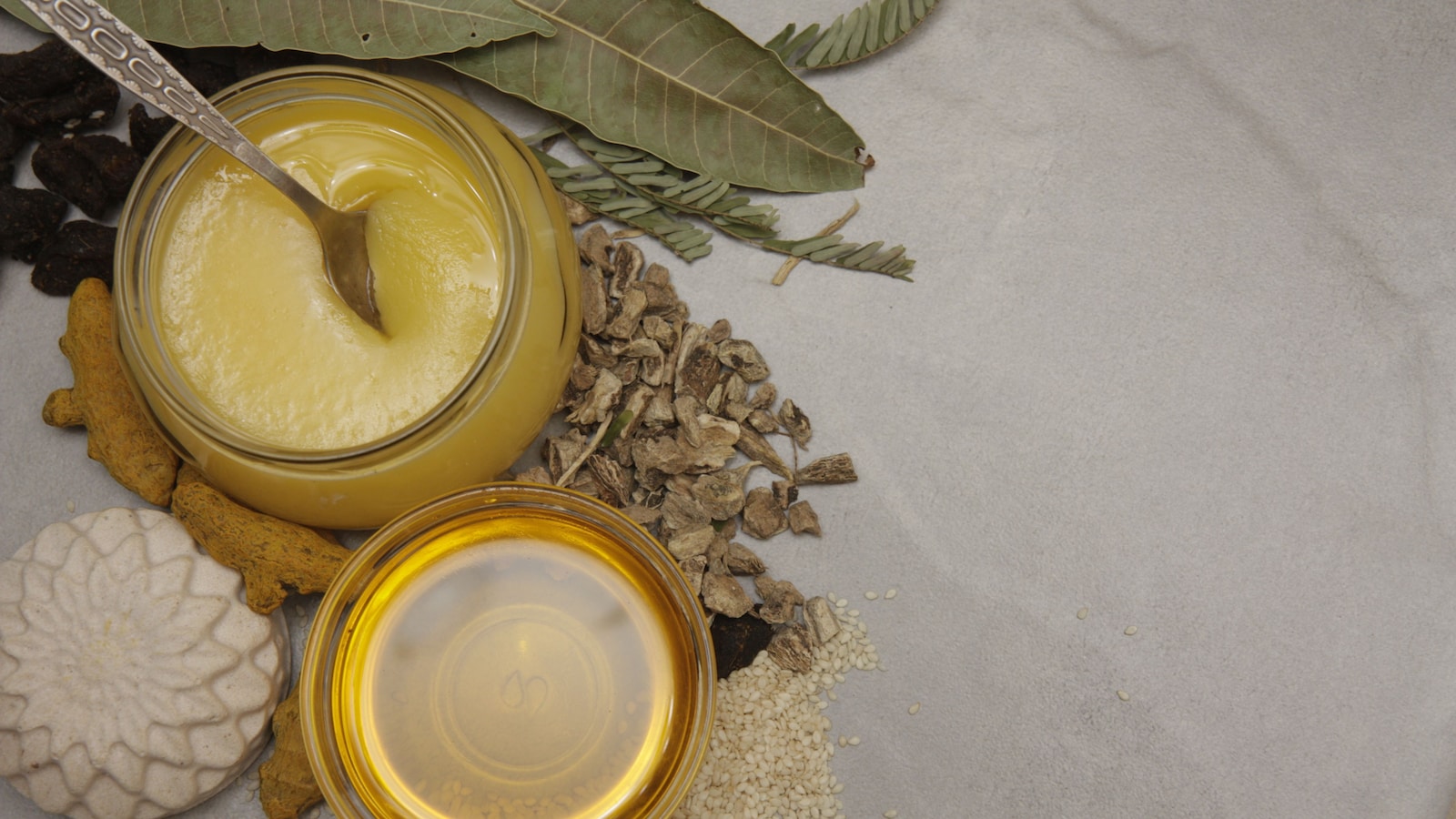
That jar of ghee may not be as pure as the label says. The Food Safety and Standards Authority of India (FSSAI) has put out a short video on how to check if ghee or butter has been mixed with vanaspati, or hydrogenated edible fat.
“Don’t guess!” the food regulator wrote on X while sharing the clip. A change in colour to crimson red or pink, it said, means the sample is adulterated.
ALSO READ | Behind FSSAI’s Fructose Crackdown: How Early Sugar Exposure Harms Infant Metabolism
Also Read | Layoffs Are Rising In Tech, But These Skills Are Helping People Unlock Better Pay
How the Test Works
According to the video, here’s what to do:
- Take 1 ml of ghee in a test tube, and add 1 ml of concentrated hydrochloric acid.
- Put in half a teaspoon of table sugar and shake the tube hard for two minutes.
- Leave it to stand until the contents separate into layers.
- Then look at the acid layer. If nothing changes, the fat is pure. If it turns crimson red or pink, the ghee has been mixed with vanaspati.
Why the Colour Changes
The video also explains the chemistry. Hydrochloric acid splits table sugar into glucose and fructose. Through dehydration, these lose water and form compounds called furfurals.
Is your Ghee or Butter adulterated with Vanaspati/Hydrogenated Edible Fat? Don’t guess! The FSSAI shows you a simple home test. A color change to crimson red or pink indicates adulteration. Watch the full video to learn how to test it yourself! #NoToAdulteration https://t.co/CHqouX8rMu
— FSSAI (@fssaiindia) November 7, 2026
Furfurals react with phenols found in the sesame oil/vanaspati, and that reaction produces the red or pink colour. Pure ghee doesn’t have those phenols, so the colour stays as it is.
ALSO READ | FSSAI Moves To Restrict Added Sugar In Foods For Babies Below Six Months
Handle With Care
Concentrated hydrochloric acid is corrosive and can burn skin and eyes. Anyone trying this should wear gloves and eye protection, use a glass test tube, work in a well-ventilated space and keep the acid away from children.
The video was shared under FSSAI’s “#NoToAdulteration” campaign and ends with the logo of its Eat Right India initiative.
ALSO READ | Maharashtra vs FSSAI: Why The State Has Moved Bombay HC Over Food Safety Rules
Why It Matters for Health
Vanaspati isn’t just a cheaper stand-in for ghee. It is made by partially hydrogenating vegetable oils, a process that creates trans fats, and vanaspati has long been one of the main sources of trans fats in Indian diets.
Trans fats raise bad (LDL) cholesterol while lowering good (HDL) cholesterol, which increases the risk of heart attacks and stroke. FSSAI, citing the WHO, says trans-fat intake is responsible for roughly 5,00,000 premature deaths from coronary heart disease worldwide every year.
To curb this, FSSAI has capped industrial trans fats in edible oils and fats, including vanaspati, at 2 per cent since January 1, 2022.
Essential Business Intelligence,
Sharp Market Insights,
Practical Personal Finance Advice, Daily Fuel, Gold and Silver Prices and Latest Stories — On NDTV Profit.


