
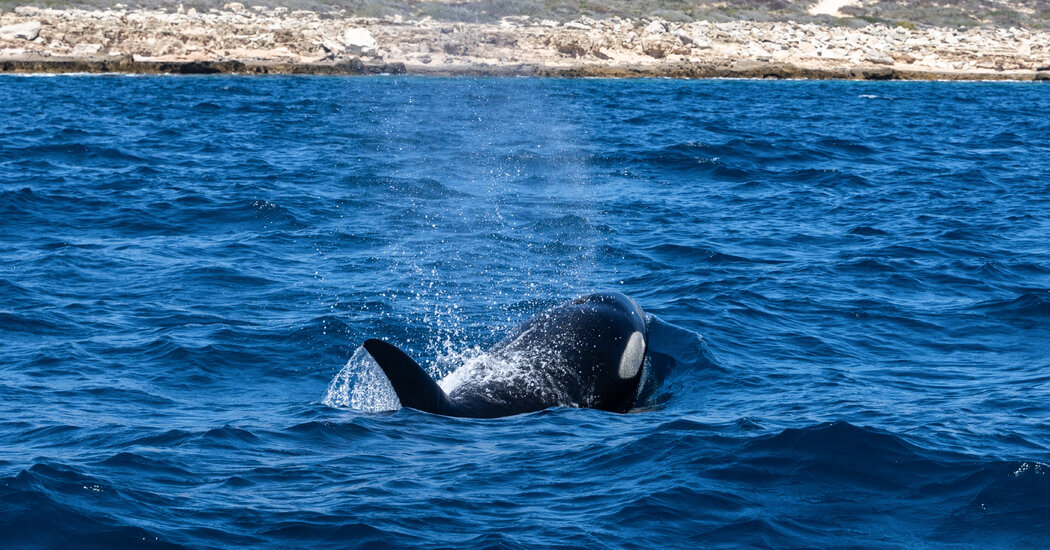
In the turquoise waters off La Ventana, a sleepy coastal town on Mexico’s Baja peninsula, Claudio Rios, 41, monitored the radio of a fishing boat. It was late March. His eyes scanned the horizon, one hand loose on the wheel as the Sea of Cortez swayed beneath him.
“It smells like orcas,” he said: pungent and oily.
He waited for a dorsal fin to slice through the waves. For captains to chatter over the radio. For boat engines to hum together. So far, nothing.
Tourists sat in boats nearby, eyes wide, hoping to spot one of several male orcas named for Aztec gods and emperors: Moctezuma, Cuitláhuac, Tlaloc. Some humans already had their wet suits on, fins at their feet — prepared to drop into the open water with the ocean’s apex predator.
Swimming with killer whales is one of the rarest wildlife encounters on earth, done in only two places: La Ventana, Mexico, and Skjervoy, Norway. In both, visitors don wet suits, snorkels and masks to observe the 20-foot-long animals moving through open water.
Growing crowds, fueled by social media and a generation that first encountered orcas in captivity or onscreen, are descending on two otherwise quiet coastal towns, bringing money and friction in equal measure. Researchers still cannot say what sustained human contact does to wild orcas. In neither country has that slowed the industry.
“Everyone will tell you there’s never been an orca attack on humans in the wild,” said Jorge Cervera Hauser, a Mexican underwater photographer who has led tours in Mexico and Norway. “But they’re highly intelligent animals. With constant pressure, an accident is bound to happen sooner or later.”
Shortly before noon, Mr. Rios’s radio crackled. The killer whales were south, close to Bahía de los Muertos. Mr. Rios grabbed the wheel, throttling the Suzuki engine to life. The boat tore through the water.

