
Want to bookmark your favourite articles and stories to read or reference later? Start your Independent Membership today.
Already a member?
Log in
Delta Electronics is a Business Reporter client
Why intelligent energy management is transforming backup batteries into strategic assets.
For decades, energy was largely invisible to telecom operators. It powered networks, supported backup systems and was treated as a predictable operating expense. Today, that assumption no longer holds.
The rapid expansion of 5G, edge computing and AI-enabled services is driving higher power consumption across telecom networks. At the same time, operators are facing volatile electricity prices, growing sustainability expectations and continued pressure to improve profitability. Energy has evolved from a utility cost into a strategic business consideration – one that directly influences operational resilience, efficiency and long-term competitiveness.
As a result, telecom operators are beginning to rethink how their infrastructure is designed and managed. Rather than simply consuming electricity, network assets are increasingly expected to contribute to broader business and sustainability goals. One of the biggest opportunities may already exist within the infrastructure operators own today.
The industry’s most underutilised energy asset
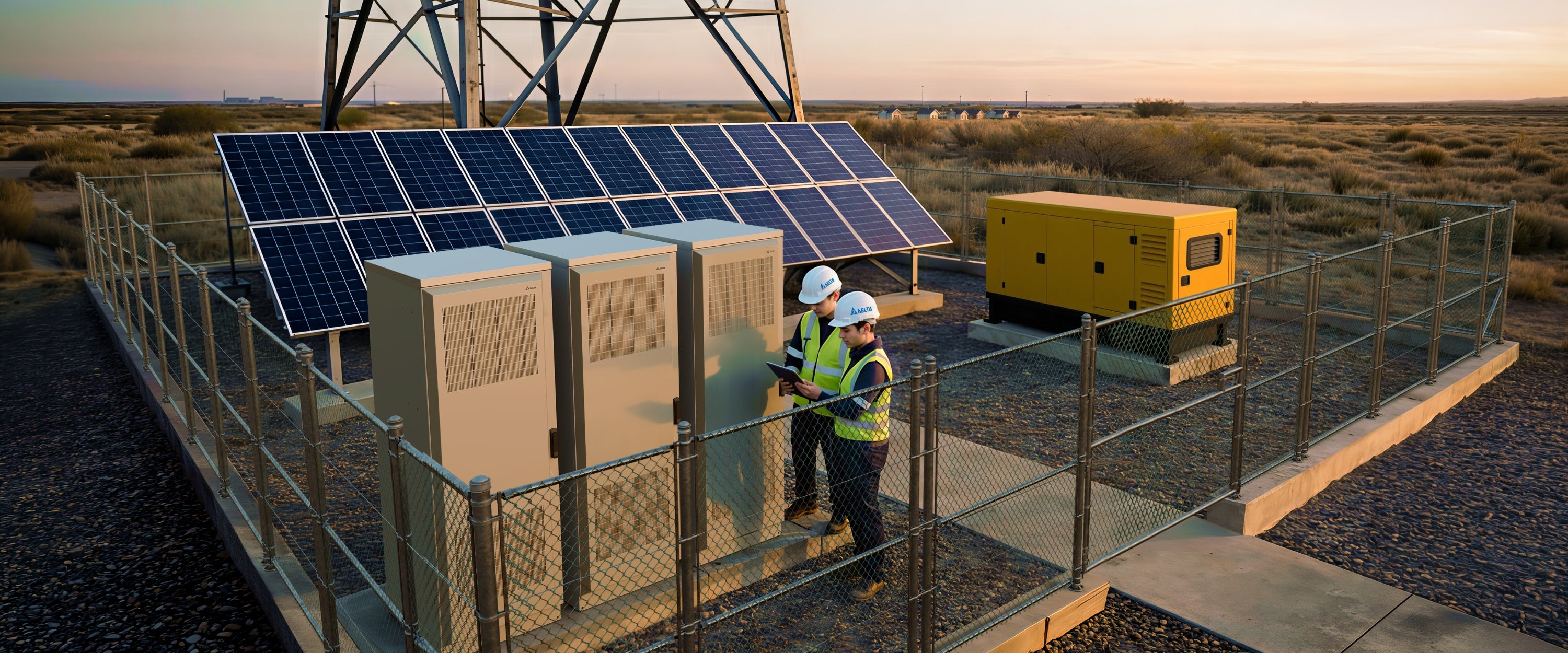
Every telecom site depends on backup batteries to maintain service during power outages. They are essential for network resilience and, in many markets, a regulatory requirement.
Yet under normal operating conditions these batteries remain largely idle. Across Europe, where grid reliability is generally high, backup systems spend almost their entire lifetime fully charged, waiting for an event that may never occur.
This represents a significant untapped resource. Operators invest in purchasing, maintaining and replacing batteries that provide value only during exceptional circumstances. As electricity markets become more dynamic, however, these assets have the potential to play a much broader role.
Instead of functioning solely as emergency infrastructure, backup batteries can become active participants in everyday energy management – reducing operating costs while maintaining the resilience they were originally installed to provide.
Why traditional energy management no longer works
The economics of electricity have changed dramatically over the past decade.
Dynamic tariffs, peak-demand charges and increasing renewable energy generation mean that the timing of electricity consumption has become almost as important as the amount consumed. Operators can no longer optimise costs simply by improving equipment efficiency; they must also manage when and how energy is used.
Advances in lithium-ion battery technology and intelligent energy management software make this possible.
Rather than remaining permanently on standby, batteries can be charged during periods of lower electricity prices and discharged when tariffs are highest, reducing peak demand and lowering energy costs. Where regulations permit, these distributed storage systems may also support future grid flexibility programmes.
The key is intelligence. Modern energy management platforms continuously analyse electricity prices, battery health, site demand and required backup capacity before determining the optimal charging and discharging strategy. This allows operators to maximise economic value without compromising network resilience.
Turning backup power into business value
One leading European telecommunications operator recently explored how this approach could improve the performance of its network infrastructure.
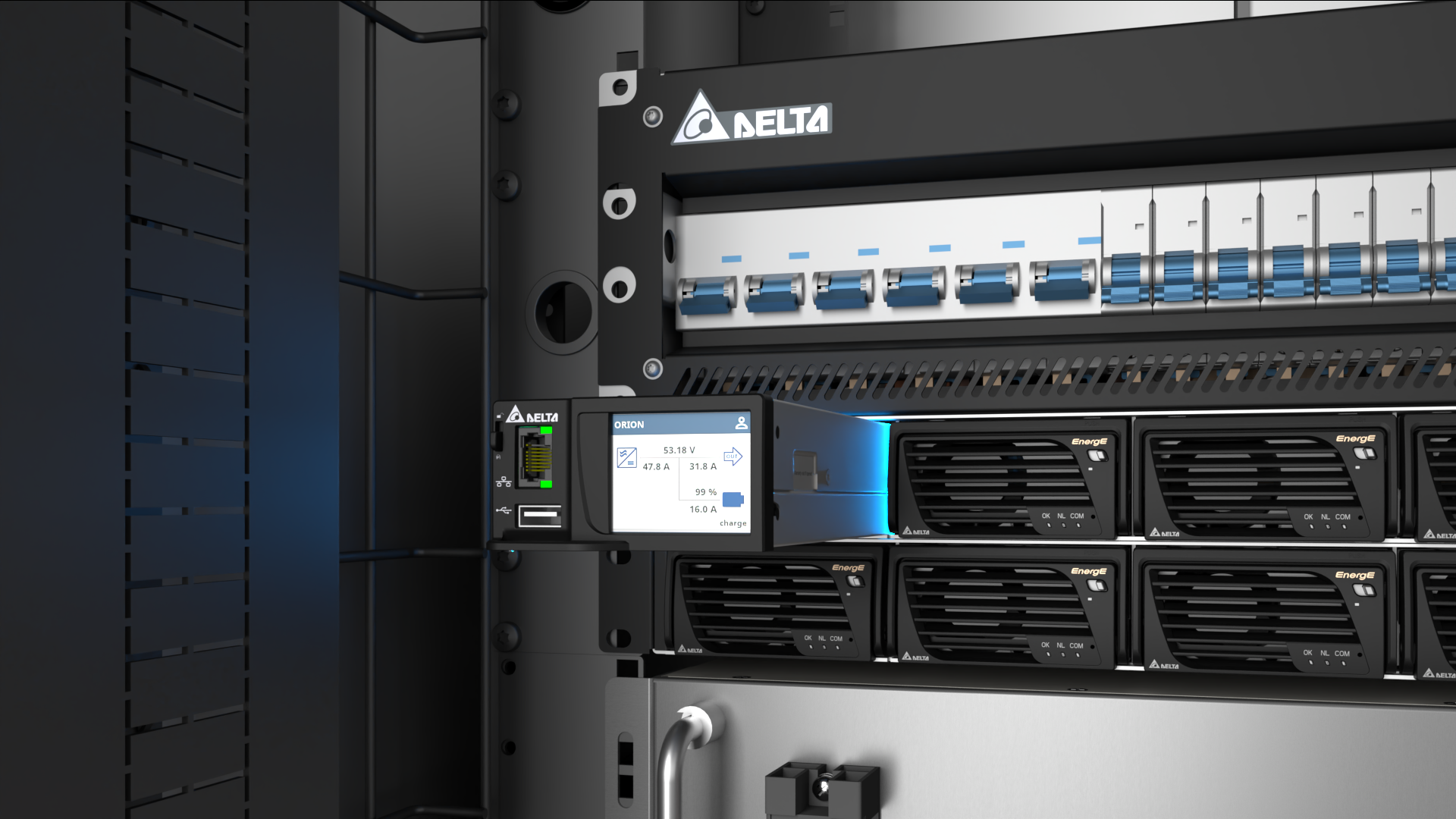
Managing approximately 700 telecom sites, the company launched a pilot programme across 171 locations using cyclic lithium-ion batteries integrated with Delta Electronics’ ORION intelligent power controller.
The system continuously evaluates electricity tariffs, battery condition, site load and required reserve capacity before automatically determining the optimal charging and discharging schedule. During lower-cost periods, batteries are charged from the grid. During expensive tariff windows, stored energy is used to reduce electricity consumption. Throughout the process, the system ensures sufficient backup capacity remains available should a power outage occur.
The results demonstrated that intelligent energy management can deliver measurable business value without affecting network reliability. The pilot achieved energy cost reductions of approximately 12–15 per cent per site. Over the lifetime of the batteries, these savings effectively offset the investment in lithium-ion technology, transforming mandatory backup infrastructure into an operational asset capable of generating financial returns.
Beyond direct energy savings, the operator also benefited from continuous visibility across geographically distributed sites. Real-time monitoring of battery health enables predictive maintenance, remote diagnostics and more efficient service planning, reducing unnecessary site visits while improving operational reliability.
Beyond cost savings: building smarter telecom networks
The value of intelligent energy management extends well beyond reducing electricity bills.
As telecom networks become increasingly software-defined and data-driven, energy infrastructure is following the same path. Automated decision-making, predictive analytics and real-time monitoring enable operators to optimise performance across thousands of distributed sites simultaneously.
This creates opportunities not only to improve operational efficiency but also to strengthen network resilience and support broader sustainability objectives.
Energy intelligence is becoming another layer of network intelligence.
Rather than treating power infrastructure as a separate operational function, operators can increasingly integrate energy management into their overall digital infrastructure strategy, using software and data to continuously optimise both network performance and operating costs.
From telecom sites to distributed energy assets
Looking ahead, the opportunity extends beyond individual telecom sites.
Europe is home to more than 720,000 telecom towers, each equipped with energy infrastructure that could contribute to a more flexible electricity system. As renewable generation continues to expand, distributed energy resources will become increasingly valuable for balancing supply and demand.
Telecom operators are uniquely positioned to support this transition because much of the required infrastructure already exists.
Sites originally designed solely to provide backup power could evolve into intelligent energy assets that optimise electricity consumption, reduce demand peaks and potentially participate in future flexibility markets – all while continuing to fulfil their primary role of protecting critical communications infrastructure.
The next evolution of telecom infrastructure
For decades, telecom operators have invested in building faster, more reliable and increasingly intelligent networks. The next opportunity is not simply to add more infrastructure – it is to unlock greater value from the infrastructure already in place.
Much of the infrastructure required for this transformation already exists. The challenge now is to use it more intelligently. Rather than serving solely as emergency backup, battery systems can become strategic energy assets that strengthen network resilience, improve operational efficiency and help operators prepare for the next generation of digital infrastructure.
As AI, edge computing and digital services continue to increase electricity demand, competitive advantage will no longer be determined solely by network speed or coverage. It will increasingly depend on how intelligently operators manage the energy that powers those networks.
The infrastructure already exists. The technology is available. The opportunity now is to transform one of the telecom industry’s most underutilised assets into a strategic advantage.


