

Want to bookmark your favourite articles and stories to read or reference later? Start your Independent Membership today.
Already a member?
Log in
Emma*, a 30-year-old video producer, really liked Sam, who she met through Bumble in 2025. She thought he was an amazing person. He was kind, funny and extremely tall at 6ft 5in. But there was one thing missing: they didn’t speak the same social media language.
Sam didn’t use Instagram or TikTok, which is where Emma spends the majority of her time as a self-described “chronically online” person. For Emma, memes are her love language. Firing off a nonsensical GIF or video to a loved one is a bonding exercise. So she grew frustrated when she became obsessed with the “Big John” meme last year – which depicted a bald Englishman reviewing his massive Chinese takeaway orders and saying his signature catchphrase, “Bosh!” – and Sam just didn’t get it.
“He wasn’t meme-literate,” says Emma. “Humor is so integral to my friendships and it made me a bit sad that we didn’t have it 100 percent in common, especially because social media is such a big part of my job.”
This is the meme gap – when one person in a relationship lives and breathes internet culture, and the other doesn’t use social media, leading to a disconnect in sense of humor, shared interests and how to spend time together. Just last year, the internet was rife with debate about the so-called swag gap – when one partner is better dressed than the other – but a social media gap may have more real, emotional consequences for people trying to build meaningful connections.
In an opposite experience to Emma, 27-year-old Lily* was the offline party in her one-year relationship with Chris, who she met in a bar in 2021. On their first date, she learned that he was a model and content creator – and by the third date, she was behind the camera, taking pictures of him for his Instagram feed. He was constantly checking his social media accounts and spent time meticulously drafting captions. Then, when they were apart, she would notice – from her private, incognito Instagram account that she uses periodically – that he would be uploading new posts instead of responding to her messages. “It got overwhelming,” she says. “I hated how much of his life was online.” In the end, she realized they lived such different lifestyles that it wasn’t going to work out.
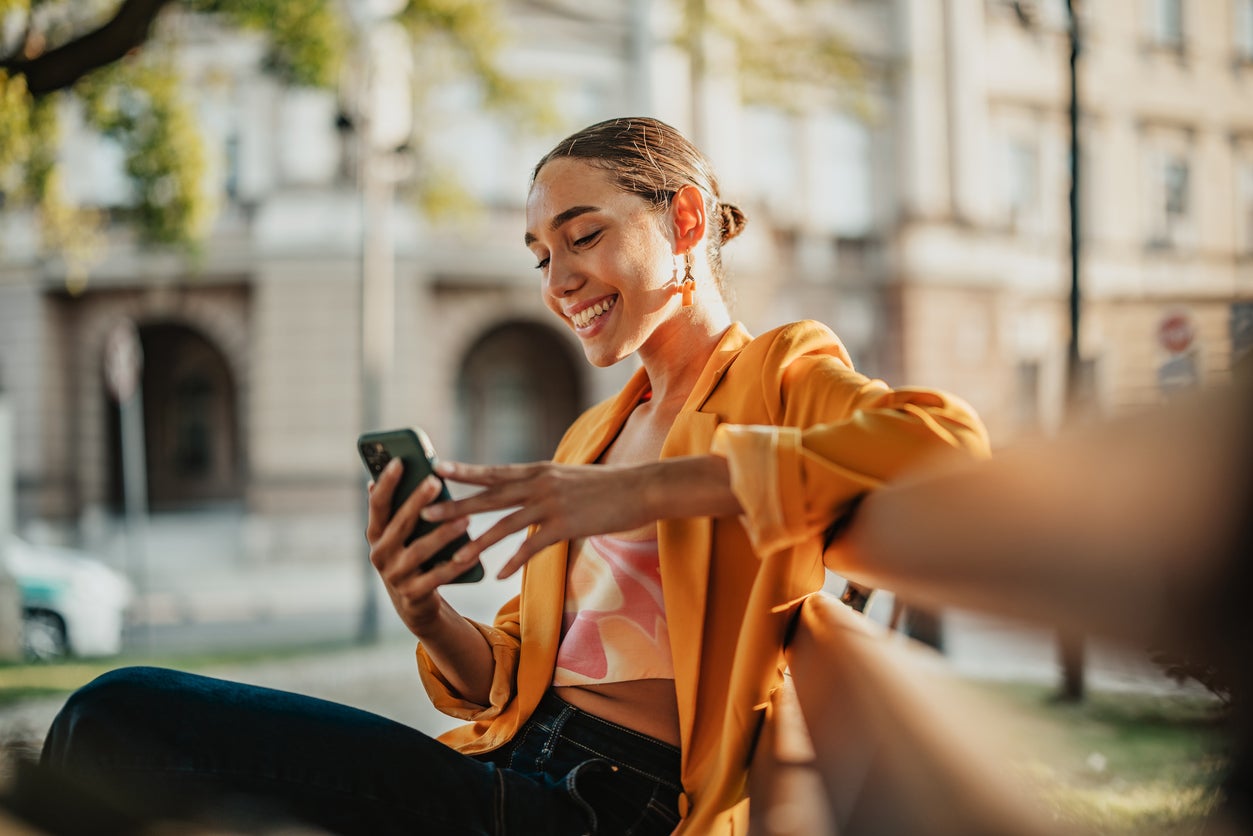
In Emma’s case, she noticed that she and Sam had completely different relationships with their cell phones. She always has her mobile by her side, but he lives his life much more off-the-grid. “I’m a chronic texter,” she says. “I reply straight away and he would only reply to me three times a day when he was sat down and could look at his phone, because he couldn’t do two things at once.” Eventually, things fizzled out between them.
The social media gap is something that LA-based Chloë Bean, a licensed marriage and family therapist, has observed in her work. “The online partner is putting so much energy into a more curated version of themselves: deciding what to say, how to look and what to share with the public,” she says. “The offline partner isn’t in that world, so it can feel like they’re living with two different people.”
She says that a disparity in internet references can create a layer of disconnect. “If memes become the main way that one partner expresses humor or playfulness, the other partner will miss that side entirely,” she says. “And the partner that isn’t online is also missing those cultural references altogether. When the memes don’t land with the other partner they can feel unseen or left out.” While it is not essential to bond with memes, she says “what matters is that couples laugh together in a shared way.”
Bean adds that a difference in humor or internet habits doesn’t automatically mean incompatibility. “Couples build their own jokes over time and those are more valuable than viral memes,” she says. “The online partner can explain the reference as an invitation into their world instead of a test: let me show you why this is so funny. Be silly together while you’re in person, not just saving the humor and play for screen time.”
Leigh Norén, a Sex & Relationship Therapist, says that all strong relationships can survive differences, but it’s about communicating about them. “If one partner believes social media is ‘rubbish,’ and the other doesn’t — it can start to cause a rift where one partner looks down upon their partner’s use of social media apps,” she says. “This kind of situation is, again, usually a symptom of an otherwise muddied relationship dynamic. In general, relationships and marriages should be able to handle different interests and opinions.”
When it comes to addressing how the presence of phones and devices affects the relationship, Norén says partners can set rules or limits to improve quality time. “I advise couples to decide together how they want to deal with social media usage in their relationship. For some, it’s about choosing to silence their phones after a certain time at night and spend quality time together,” she says. “For others, it’s about deciding that they don’t simultaneously scroll while bingeing their favorite series together.” The most important thing, she says, “is that this feels like a joint, mutual effort, for the health of the relationship.”
When Emma started dating again, she shifted her preferences to search for someone who could keep up with her internet references. She met Oliver, who – bingo – worked as the head of social media for a big company and, just like her, couldn’t put his phone down. “I’m 95 percent sure I picked him because of his job,” she said. “And I was immediately like, oh my God, this man is gonna be chronically online. Everything that came out of his mouth was like, meme, meme, meme, and I got every single one,” she says. “It made me feel a bit more like we had the same sense of humor.”
For Emma, it’s been a lesson in what she likes and doesn’t like. “I’ve realized it’s a red flag for me if they don’t have social media.” Now, one of the prompts on her Hinge profile reads: “You must be meme-literate.”


