
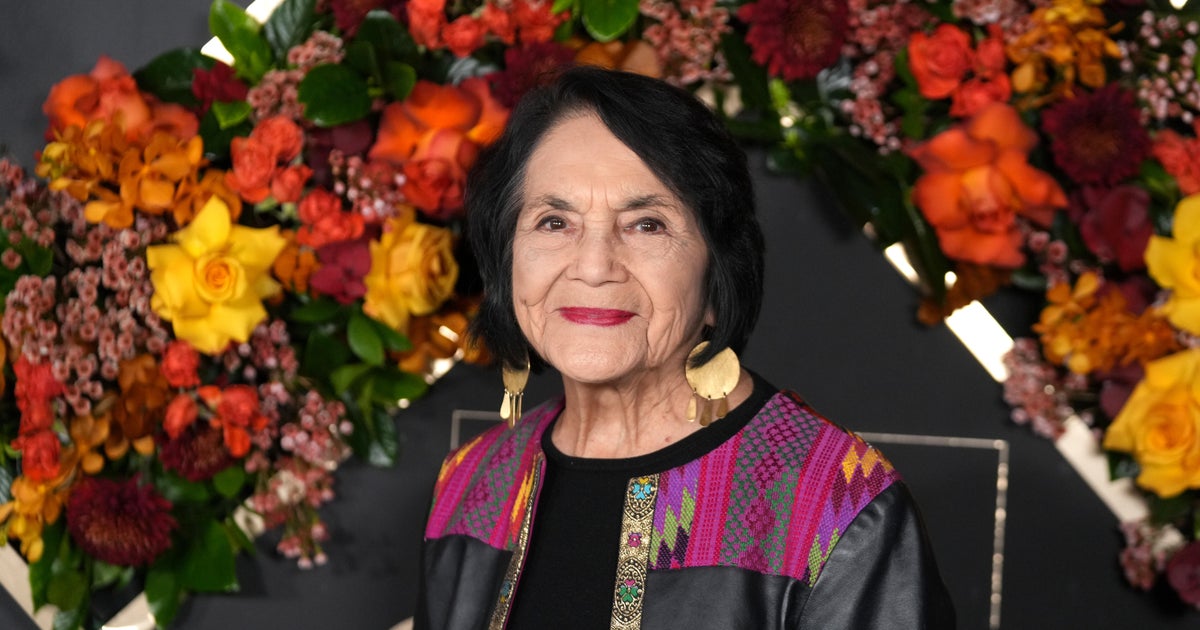
Dolores Huerta, the labor activist and civil rights leader who co-founded with Cesar Chavez the group that later became the United Farm Workers, has died, her family said in a statement posted to social media. She was 96.
Huerta’s family said in a statement through her foundation that she died Wednesday at home.
“As you can imagine, this is an incredibly difficult time for us, and we ask for privacy as we grieve this incredible loss to our family,” the family said. “We know that many of you around the world share in our mourning.”
Huerta kept a busy schedule well into her 90s, marching in protests and speaking in cities across the country about race, poverty, LGBTQ+ and women’s rights on behalf of her Bakersfield, California-based foundation.
Huerta’s resolve cemented her place in history as one of the nation’s most influential labor leaders, civil rights icons and feminist activists. Her three-word Spanish-language slogan “Sí se puede” — which translates to “Yes, it can be done” — was grounded in the belief that people could affect change.
Her work over the decades earned her a number of accolades, including the Presidential Medal of Freedom, the nation’s highest civilian honor. When then-President Barack Obama presented the award in 2012, he praised Huerta as a tenacious leader and joked that he had stolen her slogan for his 2008 campaign.
This year, Huerta sent shockwaves through the Latino community when she revealed that she was sexually abused in the 1960s by Chavez, leading to the birth of two children, a secret she kept for 60 years and long after he died.
From the early 1970s on, Huerta’s life partner was Richard Chavez, César’s brother, and together they had four kids. She also had seven children from two earlier marriages.
Huerta said she had kept silent for so long because she feared that coming forward would compromise her life’s work and unravel all the progress made for workers.
When asked during a 2026 interview with the news organization Latino USA about keeping the secret, Huerta said: “It was my personal pain, it was my personal problem and, you know, I think it was worth it because it was my cross to bear. I’ll say it that way.”


