
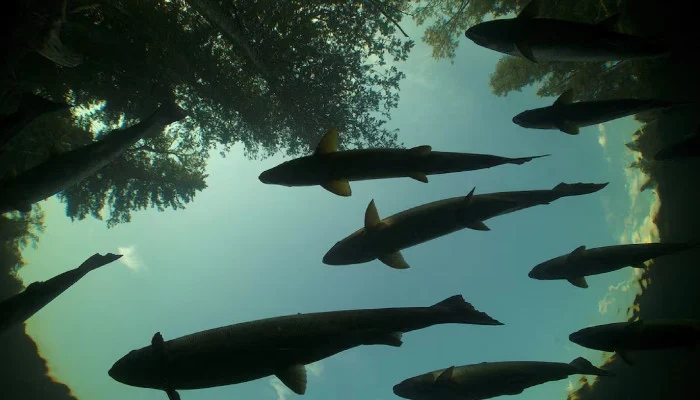
Migratory freshwater fish populations crucial to river health and sustaining the livelihoods of millions of people are in freefall and risk collapse, a major UN assessment warned on Tuesday.
Habitat destruction, overfishing and water pollution from the Amazon to the Danube threaten the very survival of hundreds of species whose epic voyages along the world´s great rivers go largely unnoticed.
Freshwater fish face multiple threats, said the report published at the opening of the COP15 summit on migratory species in Brazil, making them “among the most imperilled vertebrates”.
Populations of Mekong giant catfish, European eel and various sturgeon species are among those that have been decimated in recent decades due to man-made pressures that include the construction of dams and harvest for caviar.
Some — including the Chinese paddlefish — have already been declared extinct, while others are functionally reliant on captive breeding stock and reintroductions to support wild populations.
According to conservation group WWF, migratory freshwater fish numbers have plunged some 81% since 1970.
These fish — a vital protein source for people and animals around the globe — require unimpeded passage to move between spawning and feeding grounds, which can span across borders.
This means international cooperation is needed to arrest their decline.
The report, by the Convention on the Conservation of Migratory Species of Wild Animals (CMS), identifies nearly 350 migratory fish species that could benefit from greater protection under the international framework.
Species including salmon, eels, and lampreys are among those to be considered during the March 23-29 meeting in Campo Verde.
Of these, the vast majority are found in Asia, followed by South America and Europe.
The river basins deemed priorities are the Amazon and La Plata-Parana in South America, the Danube in Europe, the Mekong and the Ganges-Brahmaputra in Asia and the Nile in Africa.
“This assessment shows that migratory freshwater fish are in serious trouble, and that protecting them will require countries to work together to keep rivers connected, productive, and full of life,” said Zeb Hogan, the lead author of the assessment, in a statement.

