We’re just two weeks away from the start of the college basketball season, and because of all of the eligibility issues — five-for-five lawsuits, stricter international requirements, conferences cracking down on former pros playing in college — we’re still not certain what this season’s rosters are going to look like when finalized.
But in the backdrop of these eligibility fights, programs have been turning their attention to future rosters, recruiting prospects in the 2027, 2028 and 2029 classes. The early signing period is now less than a month away, so it’s time to release our top 10 recruiting classes, with a look at some early trends to monitor.
Commitments at a faster pace than 2026: When we released our initial recruiting 2026 class rankings last October, we only had enough data to publish a top five. Only 14 top-50 prospects and 40 top-100 players were off the board. At the same point in this 2027 cycle, 32 top-50 prospects and 68 top-100 players have committed.
The elite of the elite are still waiting: Despite the surge of commitments over the past few weeks, the players at the top of the rankings haven’t budged. None of the top eight prospects in the SC Next 100 have announced a decision and only seven of the 19 five-star prospects have picked a school. There’s still plenty of room for movement in the class rankings as they come off the board.
Mid-majors are crashing the top 100: With a heavier emphasis on the transfer portal and building more experienced rosters at the power-conference level, there’s no longer a sense of urgency for those programs to sign high school recruits. On the flip side, back-end top-100 recruits are beginning to prioritize early playing time — which could ultimately lead to a bigger payday after entering the portal. These are some of the programs that have benefited from commitments from top-100 recruits in the 2027 class: Utah State, George Mason, Jacksonville, Saint Louis, South Florida, UC Santa Barbara, Saint Mary’s, Kent State, Duquesne and Oregon State.
Note: Class rankings are determined by a mathematical formula from Five Star Academies that weights different factors related to the quality and quantity of players in the class.
See the updated SC Next player rankings:
2027 SC Next 100 |
2028 SC Next 60 |
2029 SC Next 25


No. 35 Oneal Delancy, PG
No. 43 Darrell Davis, PG
No. 55 Derek Daniels, C
No. 90 Triston Hawthorne, PF
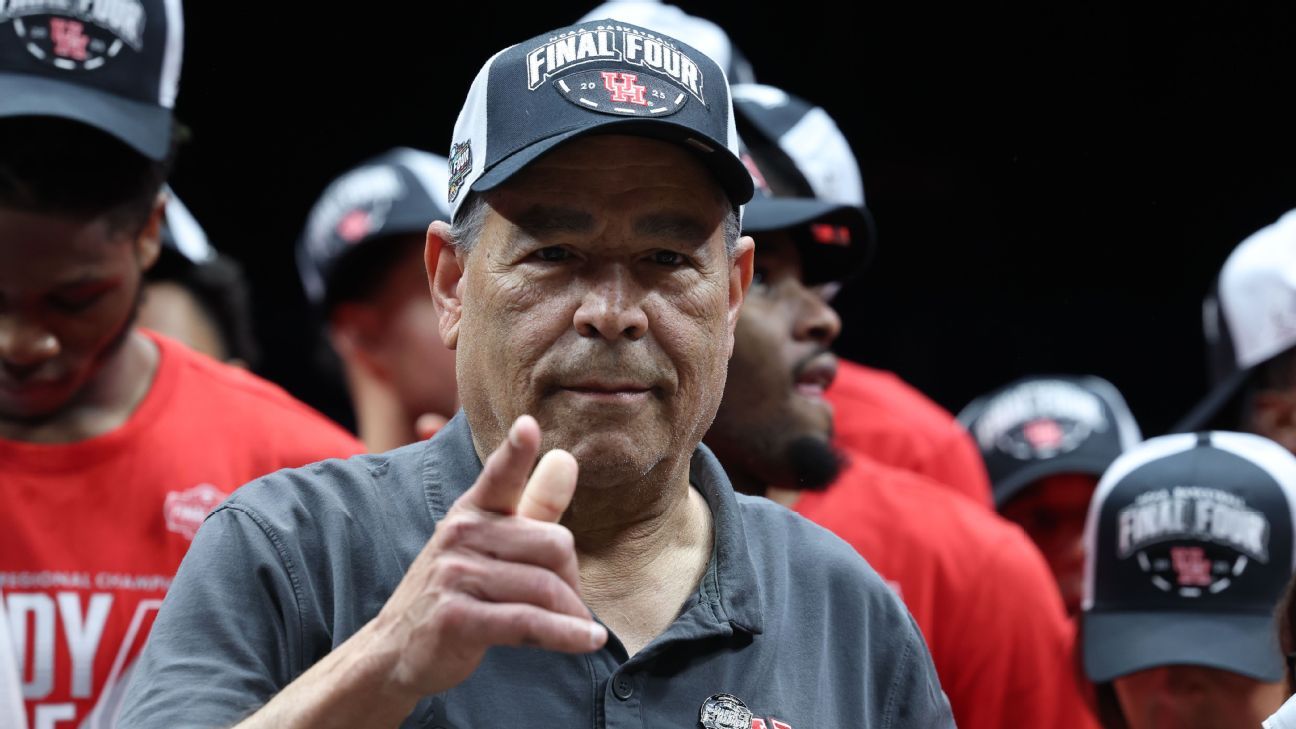
Kelvin Sampson and the Cougars already have four SC Next 100 commitments in the fold, and are quietly looking at their second top-three recruiting class in three years — they finished with the No. 2 group in 2025, when they landed three top-25 prospects. Houston currently doesn’t have anyone ranked quite that high this cycle, but four top-100 recruits gives it the edge over UConn for now.
Delancy showcased improved playmaking ability on the Nike EYBL circuit last spring and summer, but was still one of the top-scoring guards and hit the 20-point mark six times in 23 games.
Davis is both a scorer and playmaker, and will look to improve his shooting while at Houston.
Daniels doesn’t have ideal center size at 6-foot-7, but that’s rarely mattered to Sampson, who will value his defense. He comes from the same grassroots program as current freshman Arafan Diane.
Then there’s Hawthorne, a high-level athlete and one of the top shot-blockers in the class.

No. 9 NaVorro Bowman Jr., PG
No. 11 Jordan Page, SF
For the first time in at least 20 years, UConn has landed two ESPN five-star prospects in the same class. They’re also the two highest-ranked committed prospects in the 2027 class at this point in the cycle.
Bowman was the first of off the board, announcing his decision in early September after visiting Storrs. The son of former NFL standout NaVorro Bowman, he’s one of the most explosive players in the class and a high-level scorer.
A few weeks later, Page picked the Huskies. He was long considered a North Carolina lean after growing up in the Tar Heel State, but his September visit to see Dan Hurley and the Huskies changed the momentum quickly. He can make plays at both ends of the floor and brings size and length to the wing.

No. 12 Darius Wabbington, C
No. 27 Chase Branham, SG
International Felix Kiehlneker, C
After not landing a top-40 recruit in his first full cycle in Bloomington (2026), Darian DeVries has responded with two highly-touted prospects — including Wabbington, the highest-ranked recruit of DeVries’ career and the highest-ranked center for Indiana since the ESPN recruiting database began in 2007. The Phoenix native looked likely to end up at Arizona throughout most of his recruitment, but Indiana began to overtake the Wildcats following his September visit. He’s a tremendously skilled big man and can be a focal point of Indiana’s offense next year.
Branham is an elite shooter — one of the best in the entire class — and has enough size to play off the ball, while Kiehlneker will provide depth early in his career.

No. 14 King Gibson, SG
No. 25 Ahmad Hudson, PF
While Will Wade battled to put together a capable roster for the 2026-27 college basketball season, he was also laying the groundwork for future teams in Baton Rouge. Gibson is the No. 2-ranked shooting guard in the 2027 class and had nearly every program in the country in pursuit of him at one point. Wade began recruiting him while at NC State, and the consistent focus paid off. He’s a high-level defender who should be a perfect fit in Wade’s system, too.
Hudson is also the No. 1-ranked tight end prospect in the 2027 class, and has visited Nebraska since his May commitment to the Tigers. He led the Nike EYBL circuit in rebounding this past spring and summer.

No. 33 Scottie Adkinson, SG
No. 34 Devin Cleveland, SG
Four-star Cameron Barnes, PF
On the heels of a cycle that included landing two five-star prospects and a top-10 overall recruiting class, Missouri continues to stockpile talent. Adkinson is a local St. Louis product who committed in July of 2025, and is an aggressive lefty who can play either backcourt position. He’s a capable distributor but needs to get more consistent with his 3-point shot to be a true all-around offensive threat.
Cleveland picked the Tigers more than 15 months after Adkinson, but he’ll make a similar impact in Columbia. He’s a terrific outside shooter who attempted nearly half of his EYBL field-goal attempts from behind the arc.
Barnes is another Missouri native staying home for school; he’ll provide frontcourt depth.

No. 40 RJ Moore, SF
No. 50 Brandon Woodard, PF
Four-star Korey Francis, SG
This isn’t quite the 2024 recruiting class that brought future lottery picks Dylan Harper and Ace Bailey to Piscataway, but it’s still one of the best groups the Scarlet Knights have landed in the modern era. In fact, Moore is the fourth-highest-ranked Rutgers recruit since the ESPN database began in 2007, and Woodard isn’t far behind.
Moore, the son of UConn national champion Ricky Moore, is a high-volume perimeter shooter. In EYBL play, he attempted more 3s than 2s, but made them at a 36% clip.
Woodard complements Moore’s skillset well, as he’s a high-level athlete and excels in transition, doing most of his damage inside the arc.
Francis is an aggressive guard with the ball in his hands and consistently plays in attack mode.

No. 19 Kager Knueppel, PF
International four-star Luke Paul, PG
Since taking over for Mike Krzyzewski, Jon Scheyer has landed the No. 1 recruiting class thrice and the No. 2 recruiting class twice, so chances are the Blue Devils will find themselves a few spots higher when the 2027 cycle is over. That said, they’re also not casting a very wide net in the class, and already have two spots filled. Knueppel, the younger brother of Kon, is one of the very elite shooters in the class. He’s 6-10 but shot better than 47% from 3-point range on more than six attempts per game on the Nike EYBL circuit.
Meanwhile, Paul is considered one of the best international prospects in his age group and has been earmarked as a potential draft lottery pick. The 6-6 Australian point guard was outstanding at the FIBA U17 World Cup over the summer.

No. 17 Isaiah Hill, C
No. 29 Kevin Savage, PG
Under Matt Painter, Purdue has produced elite big man after elite big man. Hill could be next in line. When he committed to the Boilermakers last May, he was the highest-ranked prospect to pick Purdue in at least 20 years, and it’s no surprise Painter and his staff began recruiting him in eighth grade. The 7-foot Indianapolis native is a dominant defensive player, one of the top shot-blockers and rim protectors in the class.
With a center in the fold, Painter then turned to the point guard spot, landing Georgia native Savage just before the July live period. He was one of the best offensive players on the Adidas 3SSB circuit last spring and summer, averaging nearly 20 points and shooting better than 40% from 3.

No. 24 Antonio Pemberton, PG
No. 49 Jaydn Jenkins, C
Tom Izzo and the Spartans exited the summer without a commitment, but quickly rectified the situation with a pair of top-50 commitments in September. Pemberton was a massive stockriser over the summer, ranking second on the Adidas 3SSB circuit in scoring at 23.6 points over 19 games, while also contributing 4.2 assists and getting to the free-throw line at will. He will likely replace Jeremy Fears Jr. when he arrives in East Lansing, and he has the ability to fill those shoes.
Jenkins has impressive physical tools and can finish around the rim, but his most immediate impact might come on the defensive end, given his shot-blocking ability.

No. 22 Jarvis Hayes, SG
No. 57 Justin Wise, SG
Familial connections helped land Georgia here, headlined by legacy recruit Hayes Jr.: the son of Georgia assistant and alum Jarvis Hayes, who was a two-time All-SEC selection and an NBA lottery pick, and the nephew of Jonas Hayes, who is also on Georgia’s staff. His commitment was critical nonetheless. He is the third-highest-ranked prospect to commit to the Bulldogs in the past 15 years and is one of the top five shooting guards in the class.
Wise took almost two-thirds of his field-goal attempts on the Nike circuit from behind the arc and made them at a 36% clip over 20 games.