
Cottage cheese has always been one of those foods that sits quietly in the supermarket, minding its own business, waiting for someone to remember it exists. Then TikTok arrived, pointed a ring light at it, and suddenly, we’re in a boom.
So much so, in fact, that Scottish producer Graham’s Family Dairy has completed a £3.5m extension at its Glenfield site in Fife to meet “all-time record demand” for cottage cheese. The investment is expected to increase production by 50 per cent and create 25 local jobs.
Managing director Robert Graham said that since they noticed the trend in 2023, the business has “literally gone into overdrive to keep up with the demand”. Their cottage cheese business is now bigger than their milk business, and “we’re now exporting to places as far away as the Gulf states and Hong Kong”.
The catalyst, unsurprisingly, is social media. “Cottage cheese breakfast rounds” has clocked 15.1 million views on TikTok and “cottage cheese edible cookie dough” has reached 8.7 million. Tesco, meanwhile, has said demand has tripled over the last two years.
“TikTok food trends often result in sudden sales spikes and we saw that happen last year with Italian bread and cheese, but this is a fully fledged culinary phenomenon that has brought a lot of extra business to the UK dairy industry,” says Elizabeth Tomkins, Tesco’s cottage cheese buyer – a job title some might envy.
The scale of that surge is reflected in industry data. The Grocer reported last month that monthly volumes of cottage cheese sold in the UK rose from about 900,000kg at the start of 2023 to more than 1.7 million by the end of 2025.
Which is all very modern and very online for something that, not so long ago, felt like it belonged to a different era: Seventies baked potatoes, Eighties “slimming” lunches, a tub in the fridge that never quite got finished. But TikTok rarely leaves nostalgia alone. It digs up something slightly forgotten, films it from six angles and turns it into an obsession.
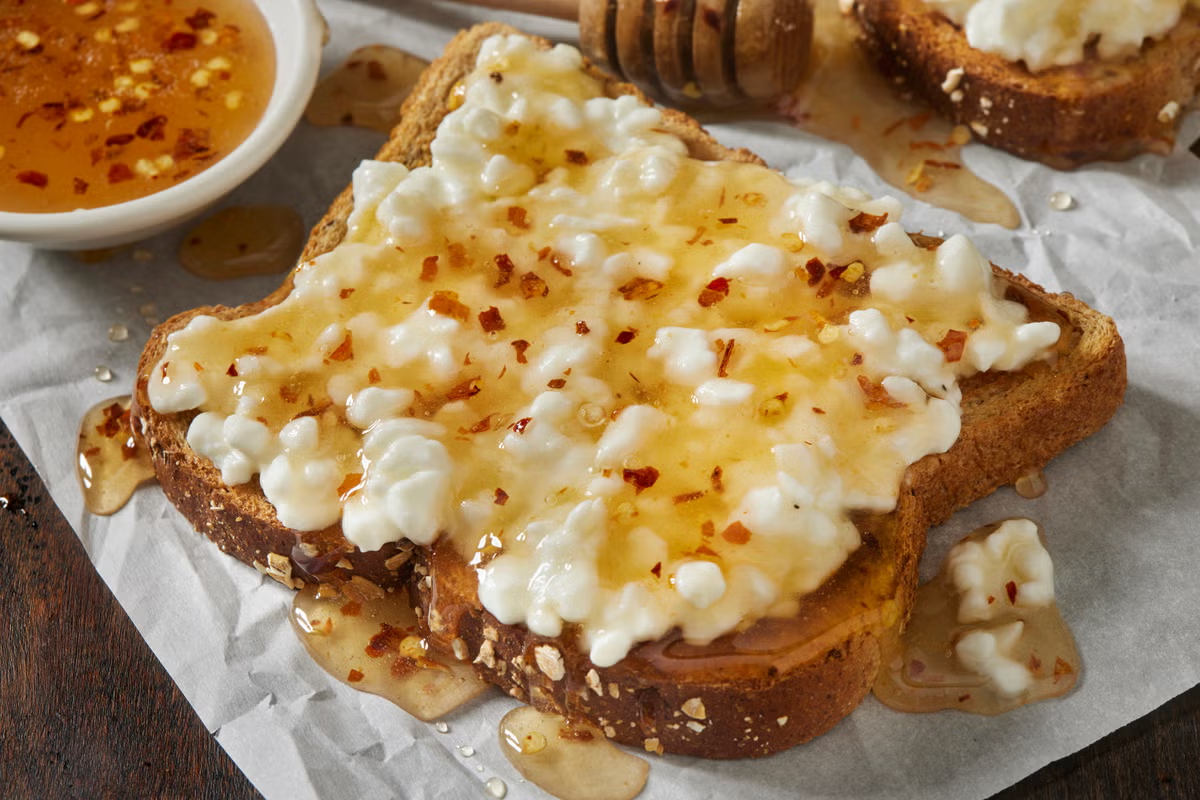
Across the platform, creators have declared themselves “cottage cheese obsessed”, whipping it with hot honey (“the new avocado”, apparently), kneading it into pizza dough for an added dose of protein or melting it into bechamel to make a “slightly healthier” lasagne.
Which raises the sensible question: is cottage cheese actually good for us, or has TikTok simply found a new way to make us feel virtuous about eating melted cheese-adjacent things?
Rob Hobson, registered nutritionist and author of The Low Appetite Cookbook, is firmly in the pro-cottage cheese camp. “It’s been around for ages, but, nutritionally, it really is a solid choice,” he says. “It’s a minimally processed dairy food that provides high-quality protein along with useful nutrients like calcium, iodine and B vitamins. You can find some newer ones on the market that also have added live cultures.
“What TikTok has really done is remind people that you can use it in lots of ways.”
Cottage cheese isn’t a flawless food (nothing is), but, in a world of protein puddings and bars that reek of self-improvement, it is relatively simple: milk, cultures, a bit of salt, curds doing curd things.
The “healthy” reputation, Hobson argues, is not baseless. “The big advantage is that it provides a lot of protein for relatively few calories and that protein is also high quality, meaning it contains all the essential amino acids the body needs for muscle repair and maintenance.”
It’s a minimally processed dairy food that provides high-quality protein along with useful nutrients like calcium, iodine and B vitamins
Rob Hobson, nutritionist
Which explains “the moment”. The Agriculture and Horticulture Development Board has noted rising “protein awareness” among shoppers: 28 per cent reported actively boosting their protein intake, with a further 29 per cent planning to increase it. A survey by Ocado suggested nearly half of UK adults had increased their protein intake in the past year, rising to two-thirds among 16 to 34-year-olds.
Beyond protein, Hobson points to the quiet micronutrient wins – the stuff that doesn’t trend as well as hot honey. “Calcium for bone health, vitamin B12, which supports the nervous system, iodine, which contributes to normal thyroid function, and smaller amounts of other minerals like selenium and phosphorus,” he says, as well as live cultures for gut health. “It’s actually quite a nutrient-dense food for something that’s very simple.”
If there is a nutritional “but” to cottage cheese, it is often sodium. “Cottage cheese does contain more sodium than yoghurt because salt is used during the cheese-making process,” Hobson says. “A typical serving might contain around 300-400mg of sodium.
“For most healthy people, that isn’t a major issue if the rest of your diet is balanced, but it’s worth being aware of if you’re already eating a lot of salty foods, or you’ve been advised to limit sodium for blood pressure reasons. As always with packaged foods, checking the label is helpful because the levels vary quite a bit between brands.”
A close second to the salt question is the fat question. Cottage cheese comes in full-fat, low-fat and fat-free versions, and the internet loves to behave as though one is more morally superior to the other. Hobson’s view is reassuringly boring.
“It largely comes down to preference and how the food fits into someone’s overall diet,” he says. “Full-fat versions tend to be more satisfying and can help with flavour, while reduced-fat or fat-free versions are lower in calories if someone is trying to manage energy intake.”
Part of cottage cheese’s charm is that it is not a £7 “functional” product with a promising font. It is, in most supermarkets, fairly cheap. “It’s one of the more affordable ways to add high-quality protein to meals, especially compared with things like protein powders or large portions of meat,” says Hobson. “For anyone trying to eat well on a budget, it’s a useful staple and you can use it for breakfast, add it to lunches, or incorporate it into cooking to increase the protein content of meals without dramatically increasing the cost.”
So is cottage cheese actually healthy? Broadly speaking, yes. It delivers high-quality protein without the cost of protein powders or the baggage that often comes with eating large amounts of red meat. It brings calcium, iodine and vitamin B12 along with it, and while it contains some salt and fat, the levels are unlikely to be problematic in a balanced diet.
In other words, the viral obsession isn’t entirely misguided – just slightly overexcited about curds.
Hobson’s own advice is simple, and perhaps the best antidote to the trend’s more manic edges.
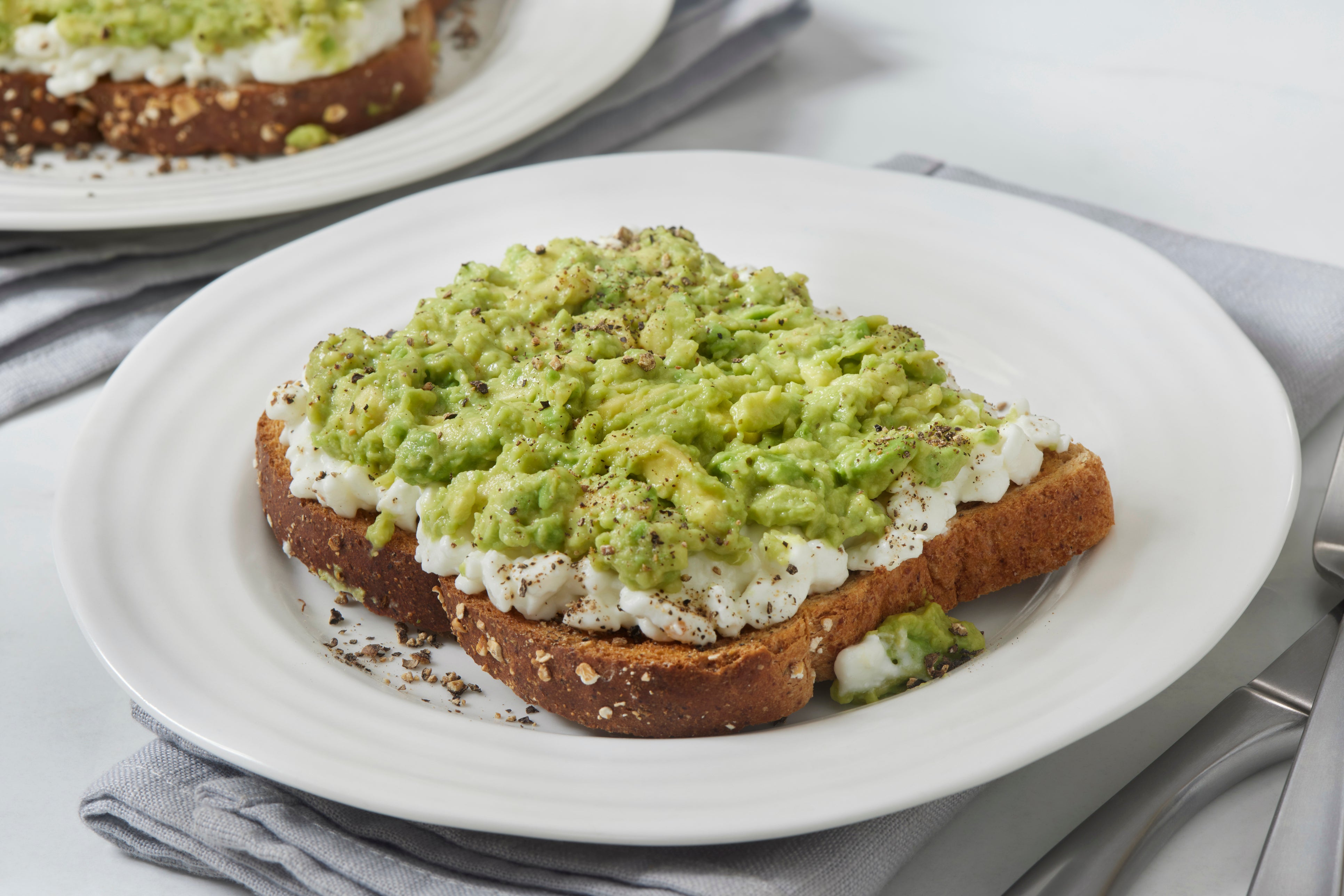
“The best approach is to treat it as a flexible ingredient rather than a ‘protein hack’,” he says. “It works well spread on wholegrain toast or bagels with cucumber slices, black pepper and olive oil (I use chilli oil), mixed into scrambled eggs, blended into pasta sauce, or added to bowls with fruit, nuts and seeds. It’s great to stuff into avocado as well.”
TikTok did not discover cottage cheese. It simply reminded everyone that a slightly unfashionable dairy product can be useful, versatile, cheap and, yes, genuinely healthy – provided you don’t insist on turning it into cookie dough every day of the week.

