
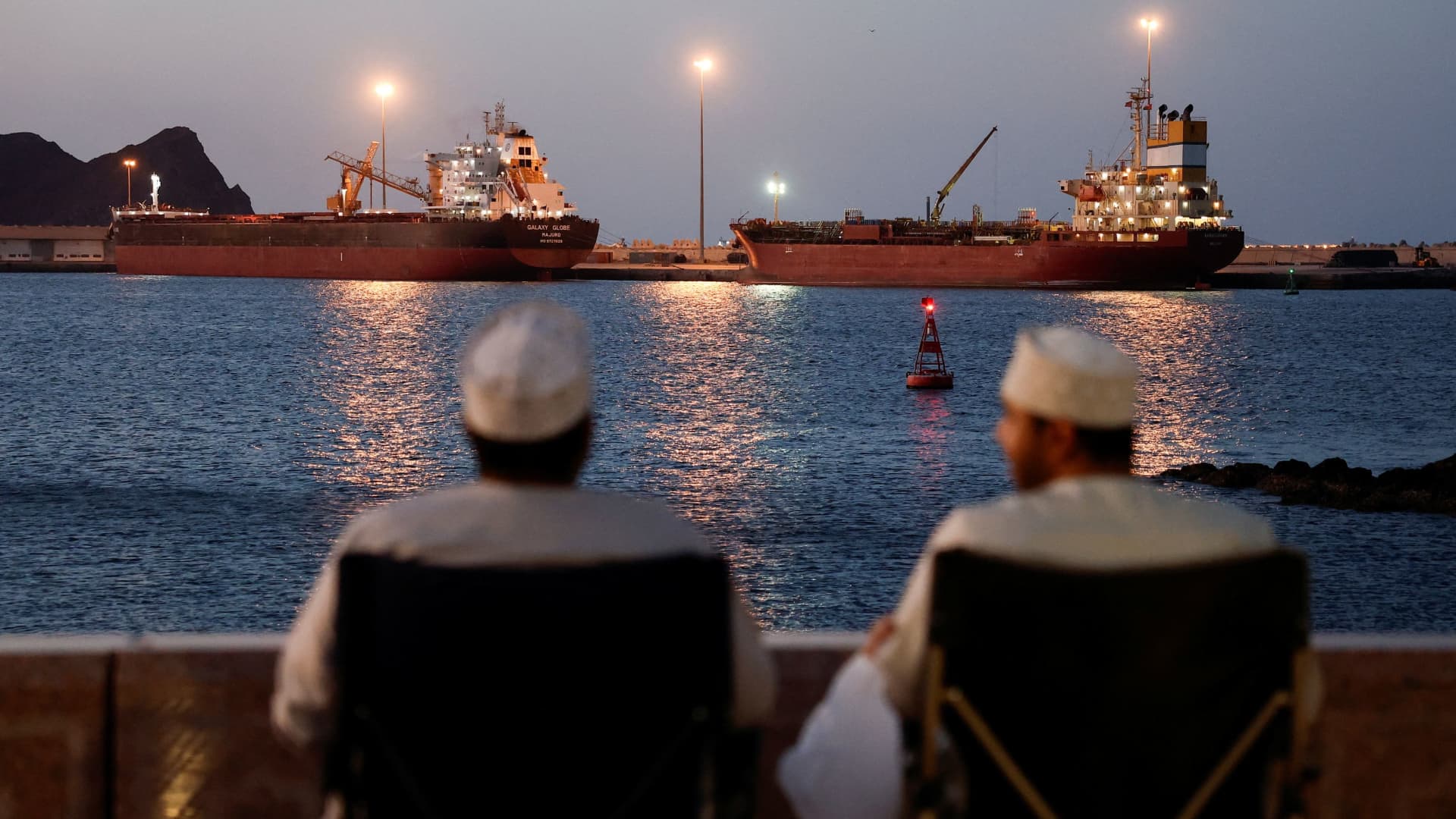
Oil prices fell below $100 per barrel on Monday, as energy ministers from the Group of Seven nations are expected to discuss a potential release of crude stockpiles to address the massive suppy disruption caused by the Iran war.
West Texas Intermediate crude futures were last up 2.98% to $93.61 per barrel by 12:49 p.m. ET. WTI rose as high as $119 overnight as Gulf Arab nations cut production because the Strait of Hormuz remains closed due to threats from Iran.
International benchmark Brent crude traded 6.38% higher at $98.60 per barrel, after hitting a high of $119.50 earlier in the session. It was the first time oil prices shot above $100 per barrel since Russia invaded Ukraine in 2022.
The G7 energy ministers will hold a virtual meeting Tuesday morning to discuss a possible joint release of oil reserves from their stockpiles, sources told CNBC. Any action on releasing reserves would occur after the energy ministers meet, they said.
G7 finance ministers held a virtual meeting Monday where they discussed the Iran war. “We stand ready to take necessary measures, including to support global supply of energy such as stockpile release,” the ministers said in a statement.
The closure of the Strait has triggered the biggest oil supply disruption history, according to an analysis by consulting firm Rapidan Energy. About 20% of the world’s oil consumption is exported through the Strait.
Brent oil prices could surge to $135 per barrel if the current situation lasts four months, said Janiv Shah, Rystad Energy’s vice president for oil markets, in a Monday note. Brent prices would rise above $110 if current conditions persist for two months, Shah said.

WTI crude oil, 5 years
Shortly after oil blasted past $100 at the open of trading Sunday evening, President Donald Trump posted on Truth Social that a gain in “short term oil prices” was a “very small price to pay” for destroying Iran’s nuclear threat.
“Only fools would think differently!” Trump added.
Gulf Arab states are cutting production because they are running out of storage space, as crude piles up with nowhere to go due to the closure of the Strait. Tankers are unwilling transit the narrow waterway because they are worried Iran will attack them.
Iran’s foreign ministry spokesman warned Monday that oil tankers “must be very careful.“

“As long as the situation is insecure, I think all tankers, all maritime navigation, must be very careful,” Foreign Ministry spokesman Esmail Baghaei told CNBC in an interview.
Kuwait, the fifth-biggest producer in OPEC, announced precautionary cuts Saturday to its oil production and refinery output due to “Iranian threats against safe passage of ships through the Strait of Hormuz.” The state-owned Kuwait Petroleum Corp. did not detail the size of the cuts.
Output in Iraq, the second-biggest OPEC producer, has effectively collapsed. Production from its three main southern oilfields has fallen 70% to 1.3 million barrels per day, three industry officials told Reuters on Sunday. Those fields produced 4.3 million bpd before Iran war.
And the United Arab Emirates, the third-biggest producer in OPEC, said Saturday that it is “carefully managing offshore production levels to address storage requirements.” The Abu Dhabi National Oil Co., or ADNOC, said its onshore operations are continuing normally.
The war showed little signs of easing despite Trump’s claim it was “already won.” Iran named Ayatollah Ali Khamenei’s son, Mojtaba, as its new supreme leader. The U.S. and Israel killed Khamenei in the opening days of the war.
Energy Secretary Chris Wright said Sunday that traffic through the Strait will resume after the U.S. has destroyed Iran’s ability to threaten tankers.
“We’re not too long away before you’ll see more regular resumption of ship traffic through the Straits of Hormuz,” Wright told CNN in an interview. “We’re nowhere near normal traffic right now. That will take some time. But again, worst case that’s a few weeks, that’s not months.”

