
A few years ago, India’s BFSI sector with leaders including Shikha Sharma (Axis Bank), Naina Lal Kidwai (HSBC), Zarin Daruwala (Standard Chartered), and Kalpana Morparia (JP Morgan), stood out as the most visible sector for women leadership.Despite the progress, industry experts note structural and cultural barriers persist at workplaces. “There are still deep-rooted stereotypes that sectors such as infrastructure, capital goods, automobiles are better suited to male leaders. Companies need to actively encourage more women to enter these fields and support them through policies, mentorship and leadership development. The share of women in STEM also remains relatively small, which weakens the leadership pipeline. At the same time, macro issues like safety continue to be real barriers,” said Emcure Pharmaceuticals executive director, Namita Thapar.While terming it as the “broken rung” challenge, Achal Khanna, CEO, professional association SHRM (APAC & MENA), cited a 2026 India Inc Leadership Report, which estimated that nearly 30% of companies have seen stagnation or decline in women in senior roles over the last five years, largely because of many exits at the middle-management stage due to limited structural support and perceived unfairness in promotions. Fixing this bottleneck will be critical to building a stronger leadership pipeline.“Beyond mentorship, what matters is sustained sponsorship, cultural change, and policies that support career continuity,” said Vedanta Resources CEO, Deshnee Naidoo. The picture is, however, dynamic and could evolve every year. Sectors that consciously promote gender-diverse talent and prioritise their growth over a period of time, are likely to stay ahead. While industries such as manufacturing, infrastructure, technology and logistics, where the pipeline remains thinner, lag.Meanwhile, multinationals have a higher share of women CEOs as diversity has been embedded in their leadership agenda, the survey said. Indian companies have begun focusing on it only more recently suggesting a gap that may take five to 10 years to narrow.
FMCG and pharma emerge as new strongholds for women CEOs – The Times of India

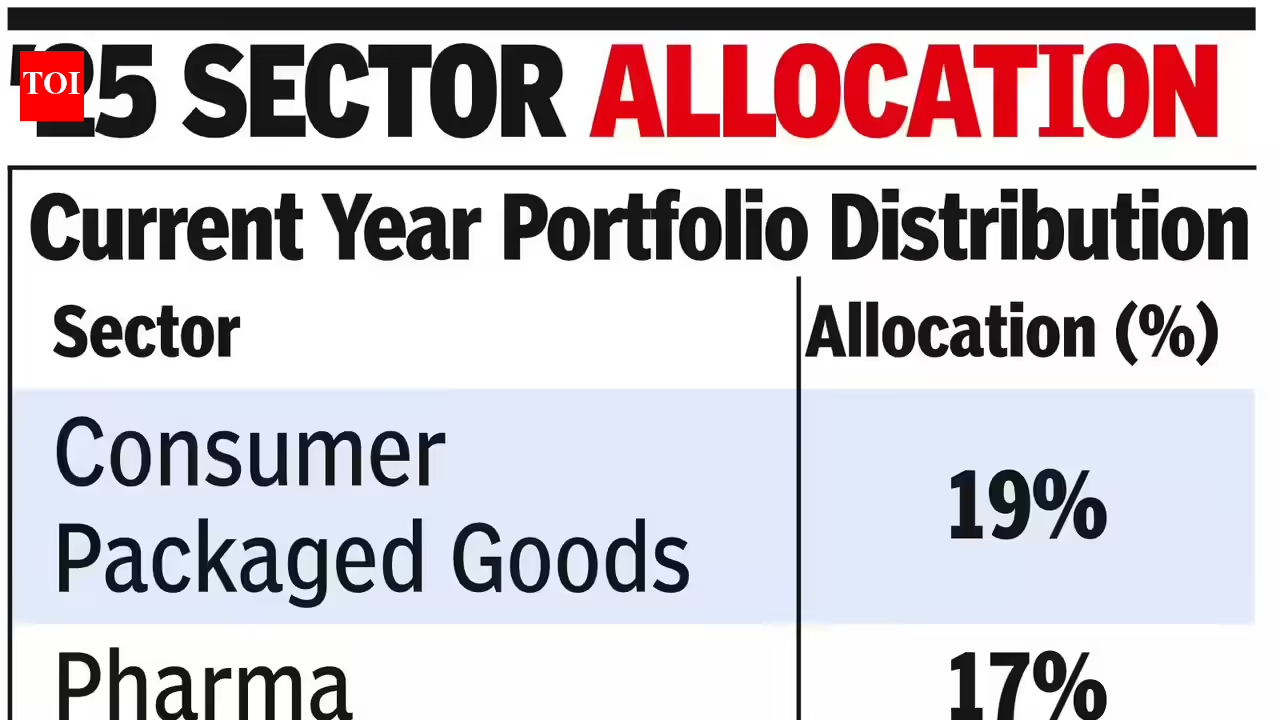
NEW DELHI: There was a time when some of India’s leading banking and financial services firms had women at the helm, making these sectors a visible symbol of gender diversity. Today, that centre of gravity has shifted.Consumer-facing industries and pharmaceuticals have emerged as the new strongholds for women CEOs, reflecting where long-standing leadership pipelines are now bearing fruit.A survey by global search firm Executive Access, commissioned by TOI, shows the FMCG sector has the highest number of women CEOs, with a 19% share. Pharma, too, has built a strong management bench that is increasingly feeding into top leadership roles, and follows with a 17% share.“Women are often known for strong intuitive decision-making – a quality that can be a major advantage in today’s uncertain and unpredictable business environment. Equally important is the fact that consumer buying decisions are heavily influenced by them. As organisations recognise this, forward-looking sectors are likely to see the share of women in leadership roles rise by at least 25% by 2030,” said Executive Access India MD, Ronesh Puri.Top women CEOs in the consumer space include Priya Nair (Hindustan Unilever), Prabha Narasimhan (Colgate-Palmolive India), and Geetika Mehta (Nivea India). In pharma, leaders such as Shweta Rai (Bayer), Meenakshi Nevatia (Pfizer), and Annapurna Das (Takeda) are among those at the helm of the Indian entities.

Recent Comments
on Hello world!