

Want to bookmark your favourite articles and stories to read or reference later? Start your Independent Membership today.
Already a member?
Log in
Everyone has heard of asthma, but pulmonary fibrosis remains largely unfamiliar to the public – even though it affects tens of thousands of people across the UK.
According to new research published by the charity Action for Pulmonary Fibrosis, many individuals living with the long-term lung condition face significant delays before securing an accurate diagnosis.
The survey of 1,200 patients found that one in three waited over a year to receive their diagnosis.
Additionally, one in five respondents saw a medical professional on five or more occasions before finally being directed to a specialist.
Many patients also reported being incorrectly diagnosed, with initial symptoms routinely confused with less serious health conditions such as asthma.
The charity also highlighted a “postcode lottery” in access to specialist care and support, with services varying depending on where patients live.
Dr Matt Swallow, clinical lead at Asthma + Lung UK, has outlined six key signs of pulmonary fibrosis that everyone should be aware of:
What is pulmonary fibrosis?
“Pulmonary fibrosis is a condition where you get scarring in the lungs, and that scarring builds up and it makes the lungs stiffer and reduces their ability to expand,” Swallow explained.
“This makes it harder for the lungs to do their job, which is getting oxygen into the bloodstream.”
Pulmonary fibrosis has a wide variety of causes and triggers.

“It can be caused by certain exposures to different things in the environment [such as harmful dusts or particles], autoimmune diseases, certain medications, and there’s also something called idiopathic pulmonary fibrosis when no cause is identified,” Swallow said.
Some types of pulmonary fibrosis stay the same or change very slowly, but others are progressive and worsen over time.
Idiopathic pulmonary fibrosis is a progressive type of pulmonary fibrosis and affects almost 40,000 people in the UK, according to Asthma + Lung UK’s website.
The charity’s website also states that you may have a higher risk of pulmonary fibrosis if you’re older, if there’s a family history of interstitial lung diseases, or if you smoke.
What signs should people look out for?
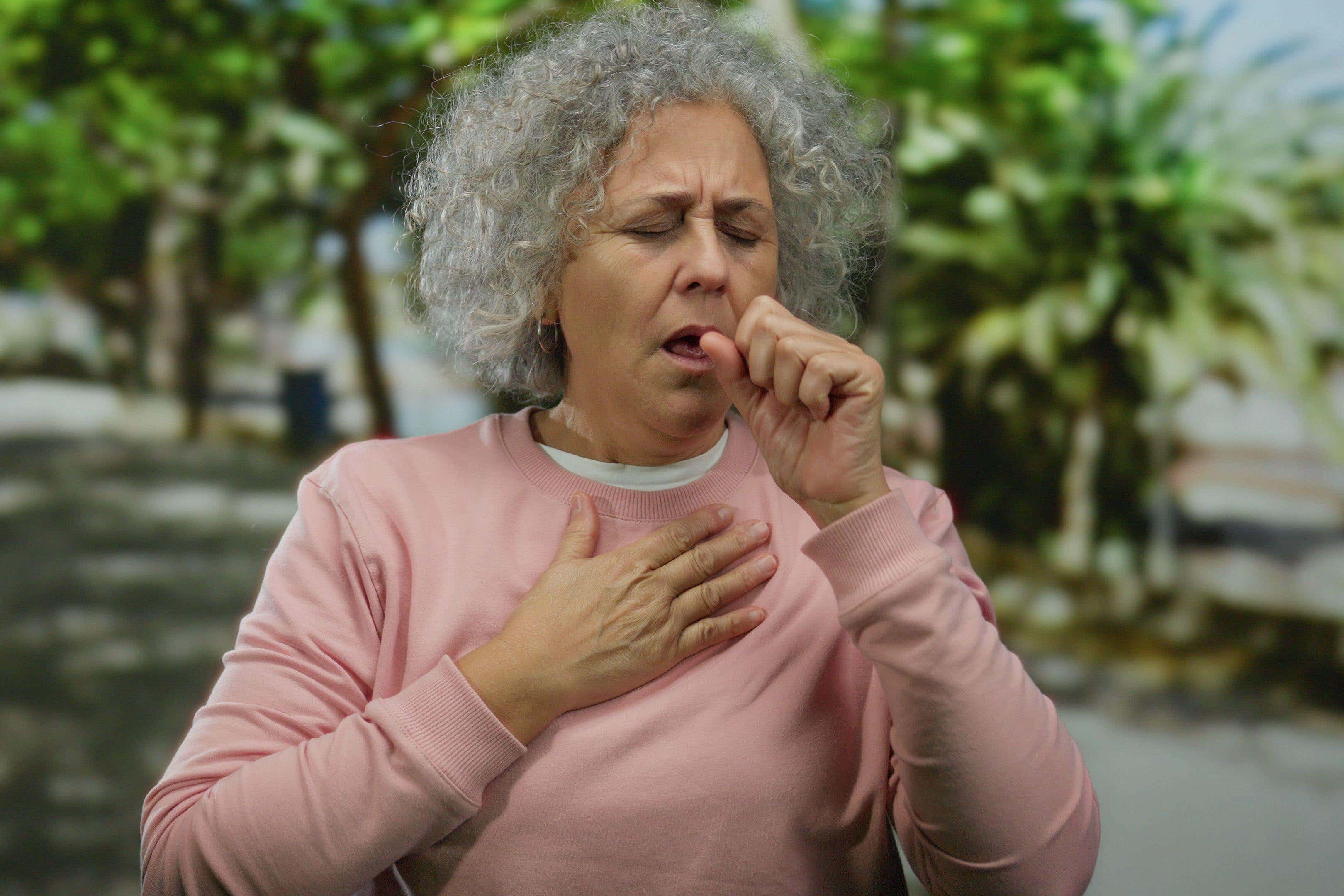
1. Persistent cough
A dry cough that does not go away and is not relieved by over-the-counter cough remedies is a common early warning sign to look out for.
“Many of us get seasonal coughs in the winter in particular, but a cough that is persisting longer than six weeks is a chronic cough that needs to be checked out,” advises Swallow.
2. Breathlessness
“Breathlessness that is out of the ordinary and that you can’t explain is another common sign,” Swallow said.
“If your breathlessness is causing a reduced tolerance to exercise and you find that usual activities are more difficult than normal, speak to your GP.”

It’s especially important to raise concern if the breathlessness gets progressively worse, he emphasised.
“For most people with pulmonary fibrosis, as the condition progresses, the worse the breathlessness gets.”
3. Fatigue
“Feeling more tired or fatigued than normal is another common symptom,” Swallow said.
4. Unexplained weight loss
“Weight loss can also happen and be a marker of the severity of the condition,” Swallow said.
5. Blue or grey lips
“Blueish or grey lips is another symptom that should provoke a visit to a doctor,” says Swallow.
It’s important to get this checked out because it could be a sign of low blood oxygen levels, according to Asthma + Lung UK’s website.
6. Finger clubbing
“This condition can also cause something called ‘finger clubbing’, where the fingertips look swollen and rounder,” Swallow said.
When should you seek medical advice about these symptoms?
“Lots of conditions present with symptoms like breathlessness and coughs, but they are still important to get checked out,” Swallow said.
“So, if you have a persistent cough, are feeling more out of breath than normal, or are feeling more fatigued than normal, then you need to see your doctor in order to get an assessment to work out what is causing it.”
How is pulmonary fibrosis diagnosed?
“Examination-wise, your doctor would check your oxygen levels through a simple pulse oximeter test to check for a low blood oxygen level,” Swallow said.
“They would also check your fingertips to see if they look swollen and rounder and would listen to your chest with a stethoscope to see if they can hear any crackling sound.”
He explained this usually would be followed by a chest X-ray, spirometry breathing tests and a CT scan to provide 3D imaging of the lungs.
“Sometimes a CT scan is followed by a biopsy, depending on what the cause is thought to be,” Swallow added.
“A biopsy involves taking a small sample of lung tissue, but this is not always done.”
Can this condition be treated or managed?
Any scarring that’s already in your lungs cannot be reversed. However, medicines and treatments can help slow down how much the scarring progresses, and keep your condition as stable as possible.
“Antifibrotic medications and immunosuppressants can be used, and sometimes a lung transplant is recommended,” Swallow said.
Antifibrotics can help slow down scarring and the two main types used for pulmonary fibrosis are pirfenidone and nintedanib, according to Asthma + Lung UK’s website.
“In terms of managing symptoms, breathing techniques and pulmonary rehabilitation can be used to try and improve lung health, and there’s lots of things that can be done to help manage breathlessness and coughs,” says Swallow.
“There’s lots of advice on the Asthma + Lung UK website and we also have a helpline that people can ring if they have had a diagnosis and want to know about management strategies, or if they’re concerned about symptoms that they’re getting.”
Asthma + Lung UK’s helpline is here to support anyone with a lung condition whether you need practical advice, emotional support, or answers to health-related questions – get in touch on 0300 222 5800.


