

Want to bookmark your favourite articles and stories to read or reference later? Start your Independent Membership today.
Already a member?
Log in
When the writer Louise O’Neill was about to turn 38, her five-year relationship fell apart. A few months earlier, she’d been picking out pink tiles to renovate the bathroom of the home she and her partner had bought together in a coastal town in Wicklow, Ireland. Now she was moving back in with her parents, beset by a tidal wave of emotions that will be all too familiar to any woman in her thirties overwhelmed at the prospect of starting again.
“I instantly felt this panic, like ‘Oh my God, I have to get my eggs frozen, I have to get straight back on the dating apps, I should be engaged and pregnant by my 39th birthday if I rush,” O’Neill, now 41, tells me. And so she started planning out hypothetical timelines, ones that might fast track her life in the direction she’d always imagined: falling in love, getting married, having children.
Then she paused. “I just had this moment of going: ‘But is that what I actually want?’” she says. It might seem like a small question – but it’s one that many of us fail to ask ourselves before launching headfirst into our attempts to tick off the milestones of adulthood. If, she wondered, “I’m standing here and my life has fallen apart and I have to rebuild anyway”, then “surely this is the perfect time for me to take stock and put time and thought and consideration into what I actually want the next iteration of my life to look like”?
Her first realisation? That she “just wanted to have some fun”. That epiphany catalysed an odyssey of self-discovery, which would eventually form the basis of her eighth book, A Bigger Life. Her novels – including 2015’s Asking For It, which grappled with rape culture and victim-blaming – have been bestsellers, but this marks her first foray into writing memoir. “My first and my last memoir,” she laughs. “If you see me out in these streets with another memoir, I give you permission to be like, ‘no, what are you doing?’”
After a stint at a Thai wellness retreat, O’Neill travelled to Paris, London, New York and Rome, diving into the dating pool of each city by arranging near-nightly first dates – mainly using Hinge, sometimes the more exclusive Raya. All of this while working on a novel, too.
If you’re filled with app-induced ennui, such a scenario might seem like a unique form of hell. But O’Neill is an easy conversationalist with a knack for cutting through small talk – vital skills to have in the arsenal when embarking on more than 100 first dates in a year. “People would often say: did you ever get tired of dating? And I would say ‘no’, because firstly I was so curious about the person I was about to meet, but also I was really making time in my day for things that brought me joy. I went to the theatre, I went to museums, I went to galleries.”
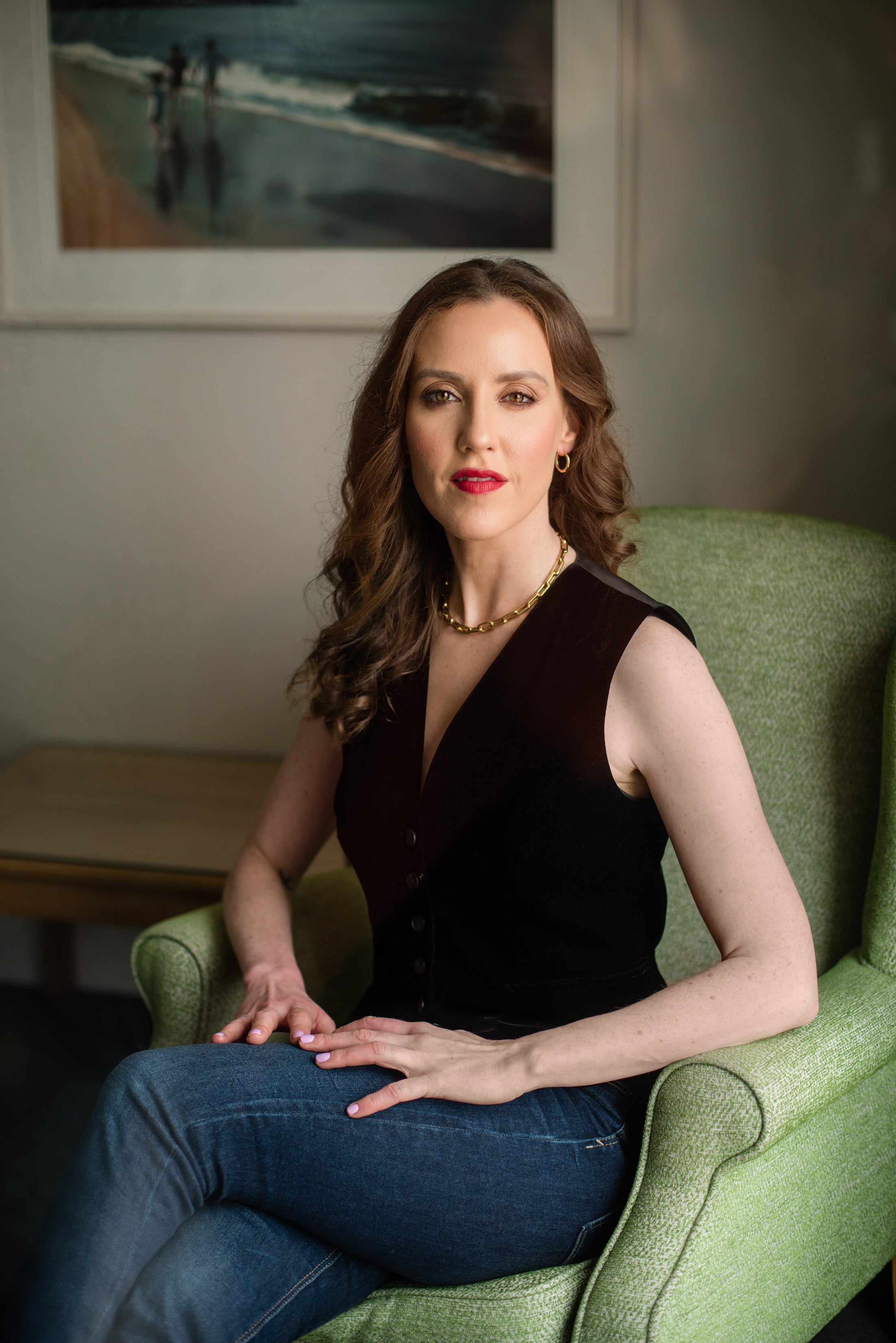
She also set aside the criteria that past versions of herself might have become hung up on, instead going into each encounter with genuine curiosity, rather than any expectations. “I think if I was very much specifically looking for a husband, I would have had a very clear checklist,” she says. “Whereas I was dating men from 27 to 56. They had all sorts of jobs and came from all kinds of backgrounds.”
A Bigger Life chronicles all those dates. There’s the longevity-obsessed billionaire who offers to start looking for properties in West Cork immediately after their first rendezvous. The Irish guy who is disconcertingly open about his habit of wetting himself after a big night out. All the French men fixated upon showing her the best view of the Eiffel Tower. But it is also the story of O’Neill “reclaiming my power” and “prioritising my pleasure, my desires and what it was that I actually wanted”. If the conventional life milestones weren’t going to happen for her, she says, she “didn’t want to waste time waiting around and saying my life can only begin when I have met the right person or when I have ticked off those markers. I wanted my life to be fun. I wanted my life to feel fulfilling, so that if I met someone, it would be that they were adding to it rather than me being reliant on them”.
Essentially, A Bigger Life is “the book that I needed to read when I was in the depths of despair after my break-up”. It is frank, funny and a much-needed corrective to the pessimism that has permeated so much of modern dating discourse – no wonder it has been branded an Eat, Pray, Love for the Hinge generation. And O’Neill’s dedication to chasing and interrogating her own desires – “women have not traditionally been taught that it’s OK for us to want things”, she says – means some have likened it to a millennial version of All Fours, Miranda July’s bracing midlife novel.
Since A Bigger Life was released last month, she’s been inundated with responses from readers struck by its candour, or by the parallels with their own lives; I’m usually precious about keeping books unmarked, but my copy is already adorned by the fluorescent stripes of highlighter pens, dog-eared corners and tiny annotations. “To hear from women who are in a similar position, or even just feeling dissatisfied with their lives, if they’ve read it and it’s given them hope, that’s been really exciting,” O’Neill says.
.jpg)
The messages, she adds, tend to fall into one of two camps. “One is, ‘do you think I should leave my husband?’ I can’t make that decision. And the other one is, ‘I spent all of my therapy session today talking about this book.’ I’m like, that is just crazy.”
O’Neill has always kept diaries, and ended up consulting her reflections on each of these encounters when she started work on A Bigger Life. It was striking just how quickly she managed to shake off the sense of scarcity and panic that underpinned her initial worries about returning to dating in her late thirties. “I think it’s so easy for women to fall into that scarcity mindset – it’s a very clever trick that’s played on us,” she says.
We’re taught to believe, whether from pop culture narratives, snide comments or social media handwringing, “that once you hit 35 or 40, you may as well be dead, there’s no one on the apps, and you’ll just be ignored”. But this is just “scaring women into settling for less than they deserve and less than what they actually want”.
When her relationship was floundering, the fear of what might await her on the dating scene kept her frozen by inaction, she admits. “There were times in my relationship where I was like, ‘I just don’t feel happy and I don’t think this is the right thing.’ But I was too afraid to move or leave because I felt like there was going to be nothing else out there. Once I started dating, it was really interesting to see how it challenged the scarcity mindset that I had, because I kept meeting really nice, interesting, fun, sexy, decent men.”
I think it’s so easy for women to fall into that scarcity mindset – it’s a very clever trick that’s played on us
Louise O’Neill
The “idea of time”, she reckons, “has really been used to browbeat [women] a bit. If you meet a man at 35, he does not feel panicked or under time pressure in the same way that a woman at the age of 35 will do”. Part of this is because we’ve “been subjected to a lot of fear-mongering, particularly around the idea of the biological clock”. Of course, a woman’s ability to have a child is significantly impacted by age, but it’s far more nuanced than chatter about how fertility supposedly “drops off a cliff” at 35 might suggest.
Her standards, she says, “have been raised throughout this dating process”, because the men she met “were not only able to meet my standards, but often would exceed them”. O’Neill sense of optimism feels particularly powerful against the prevailing wind of hetero-pessimism, and the almost performative despair about modern romance that infiltrates first our algorithms, then our own outlook.
“There are billions of people on this planet, and the fact that so many of us have come to believe that it is impossible for us to meet just one person that we could connect with, fall in love with and build a life with, I find that so sad,” she says, “and I think I really wanted to challenge that in myself.”
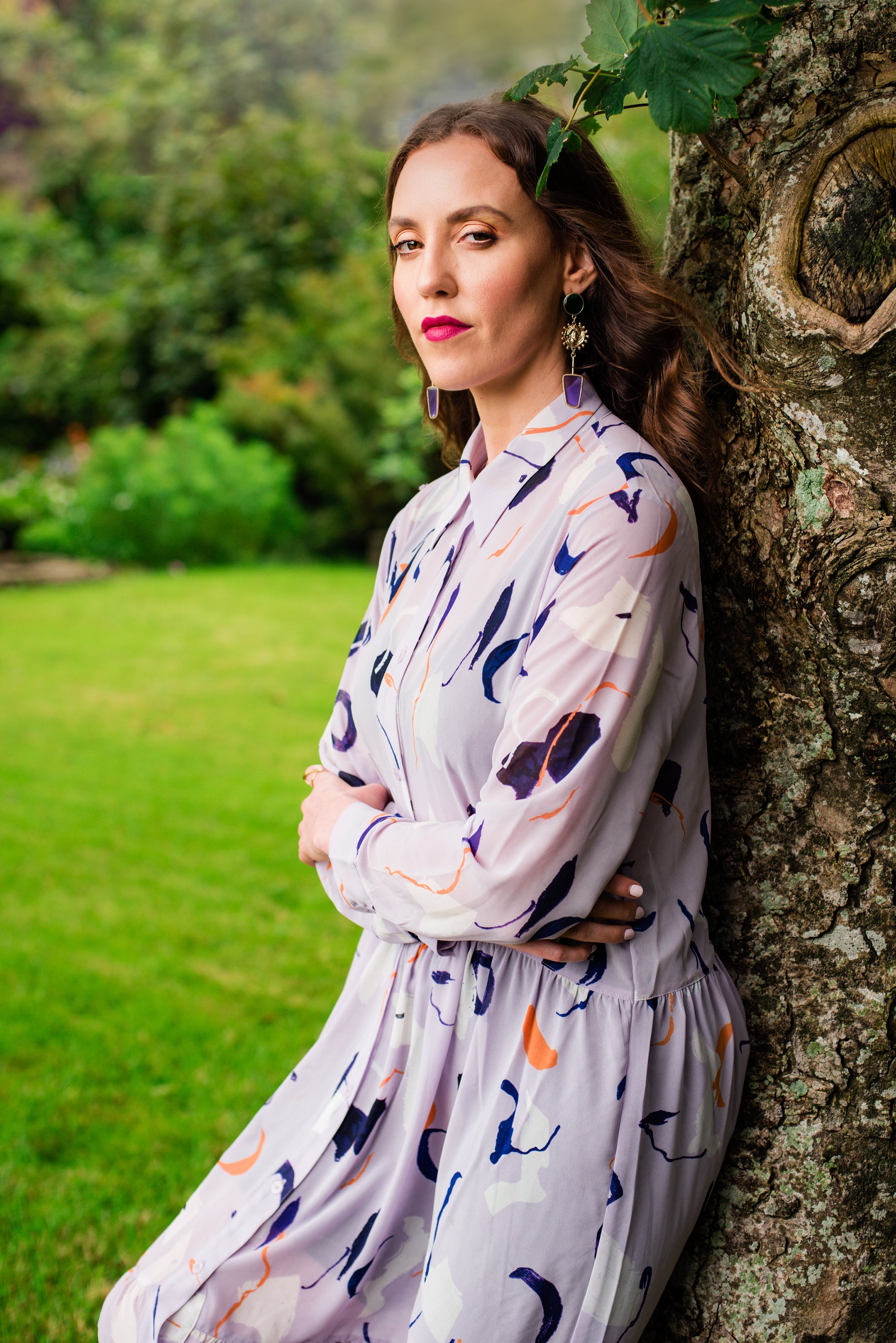
This optimism, she reckons, doesn’t require being “blind to misogyny or sexism or rape culture”, topics she’s written about extensively, but the bleakness of the world, she says, makes it important to “hold on to hope and hold on to trust that people are inherently good – genuinely, once I started doing that, the way in which my dating life opened up was incredible”.
And if we become consumed by negativity when it comes to the state of romance, she argues in A Bigger Life, there’s a risk that we may go into each encounter “still bleeding from our old wounds”, and that we shrink from potential connection in the interests of self-preservation, or “protecting our peace”.
Towards the end of her book, O’Neill turns 40 and receives a letter from her cousin, who is 17 years her junior; in it, her cousin writes movingly about what she has learned from watching O’Neill deal with the ups and downs of the previous few years. It reminded the author that living life on her own terms hasn’t just been important for her own sake, but to show other, younger women that “there are other ways of living, of ageing, of thriving”.
“I look at her coming up behind me, and I want her to be excited to turn 40,” she says. “I want her to look at me and be like, ‘oh my God, 40 looks so cool, 40 looks fun. Forty looks like it’s full of adventure and hope.’ I want her to live the biggest life that she possibly can, and I can’t say that to her unless I’m doing the same thing.”
A Bigger Life by Louise O’Neill (HQ, £20) is out now


