
Last Updated:
Inside Kannauj’s centuries-old distilleries where rain, roses and memory are turned into liquid fragrance




Perfume Day: How This City In India Bottles The Scent Of Rain And Rose For The World
Fragrance is often the most potent time traveller we possess. A single whiff of sandalwood can transport you to a grandmother’s prayer room; a burst of jasmine sometimes reminds me of late-night walks in my society, before concrete pavements replaced small gardens outside each of my neighbours’ houses. But in the winding, ancient lanes of Kannauj, Uttar Pradesh, perfumers have been doing the impossible for centuries – they are bottling the sweet scent of petrichor.
As the world celebrates Perfume Day, your mind might go to brands both homegrown and luxury, for your favourite scent, but you should also know about this historic city (once the grand Seventh-century capital of Emperor Harsha) which, while being a heritage site, is also the pulsing heart of perfumery of India, and is now a hotspot for a new brand of tourism called ‘Perfume Tourism’.
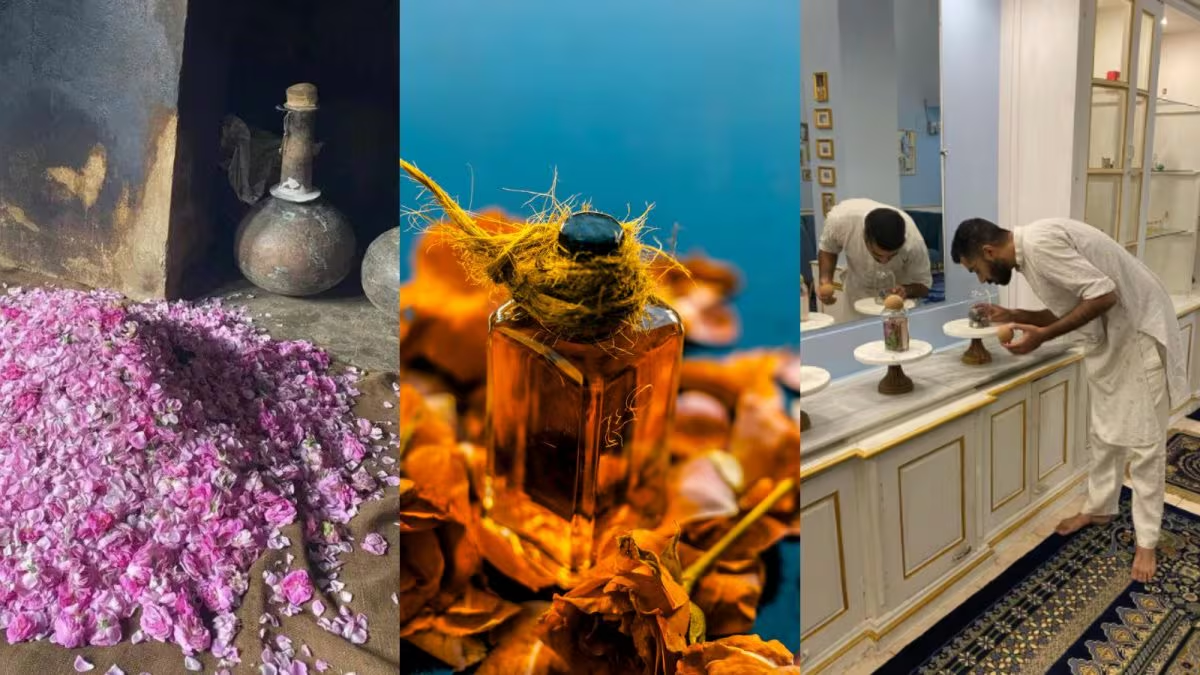
The Alchemy Of ‘Mitti Attar’
While the world’s luxury fashion houses rely on synthetic molecules and high-tech labs, Kannauj remains tethered to the earth, quite literally. The city’s most famous export is Mitti Attar, a fragrance that captures petrichor, the scent of rain hitting parched soil.
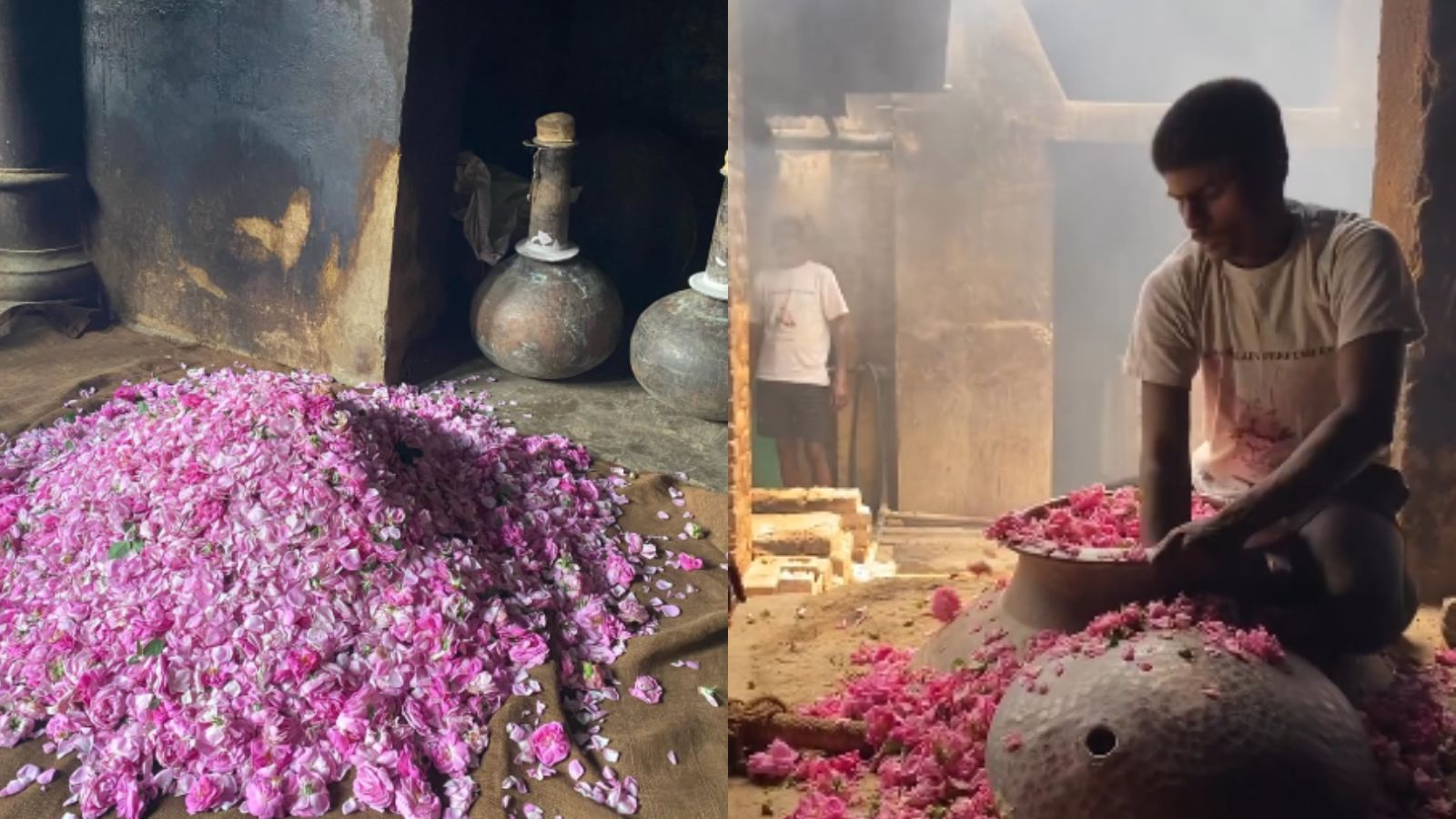
Earlier, the mud from the banks of the Ganges would be collected to extract the scent but now artisans opt for clay pots and kulhads for the same. The process is a masterclass in patience. Using the deg-bhapka (steam distillation) method, artisans simmer half-baked clay in copper cauldrons over wood fires. The fragrant vapors travel through bamboo pipes into a receiver filled with sandalwood oil. There are no machines, no electricity, and no shortcuts. All you will see inside any perfume-making shop in the city is just the steady crackle of fire and the watchful eye of a master craftsman.
From Imperial Luxury To Perfume Tourism
The legend of Kannauj’s olfactory prowess is steeped in Mughal romance. It is said that a servant at Emperor Jahangir’s palace noticed droplets of rose oil floating on Empress Noor Jahan’s bathwater. That serendipitous discovery birthed a royal obsession with itra, turning Kannauj into the scent stronghold of the empire.
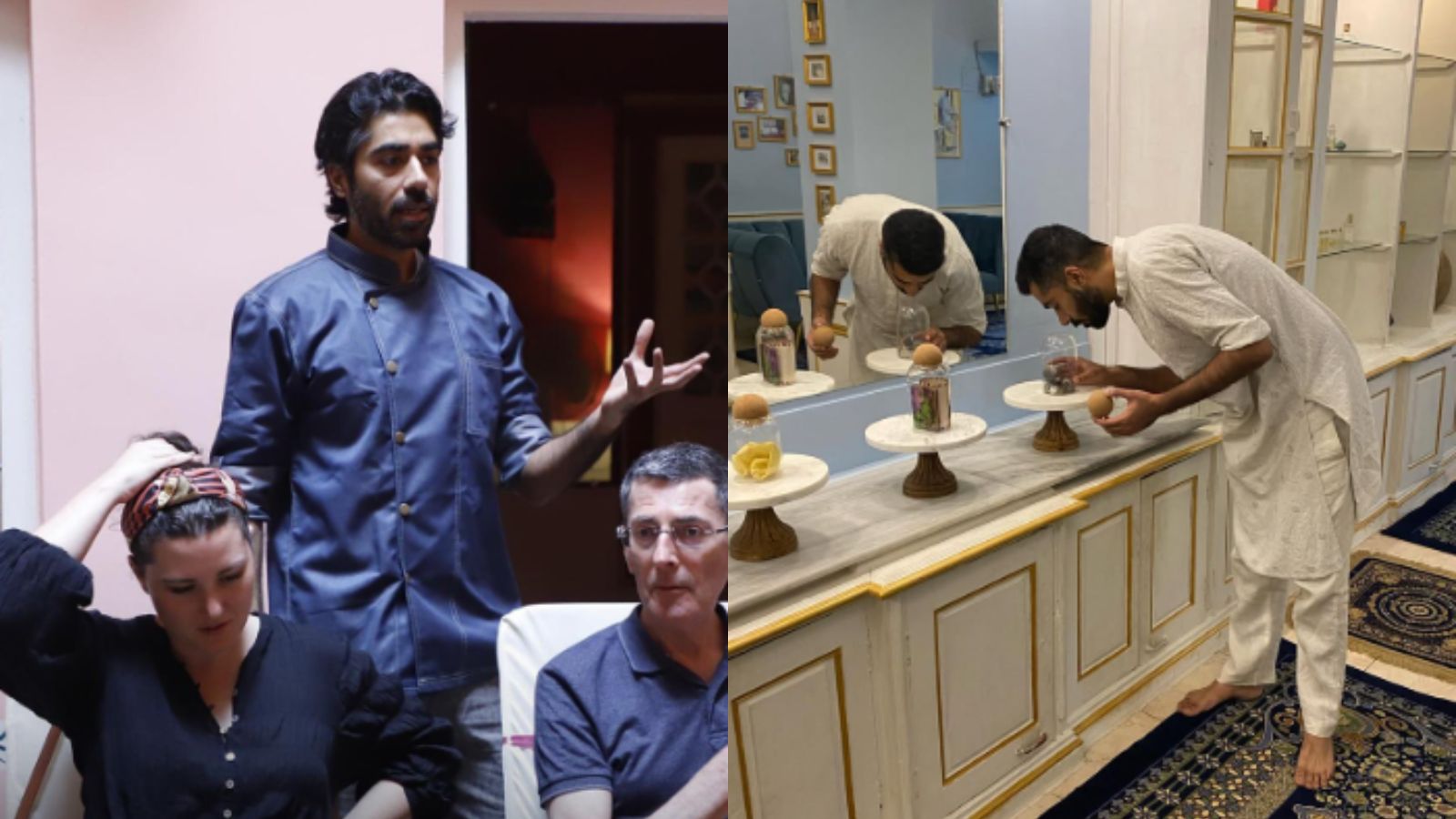
Today, that imperial legacy is being repackaged for the modern explorer. No longer content with merely selling vials in the Bara Bazaar, the city is inviting travellers to step inside the distillation sheds. And this movement is helmed by Pranav Kapoor, an 8th-generation perfumer whom I spoke to years ago. The epicentre of his endeavours is 24 MG Road, a 120-year-old ancestral haveli that offers India’s first immersive perfume retreat. Here, tourism is a sensory 360-degree experience.
You start the day by plucking roses, jasmine, and henna flowers at dawn. And then head to the distillery, where guests witness the “liquid gold” being birthed in weathered copper degs.
Back at the haveli, guests go to the Perfume Bar, where you become alchemists, blending your own signature scents based on personal memories. The journey culminates in a 7-course degustation menu where regional flavors are curated to complement specific fragrance notes.
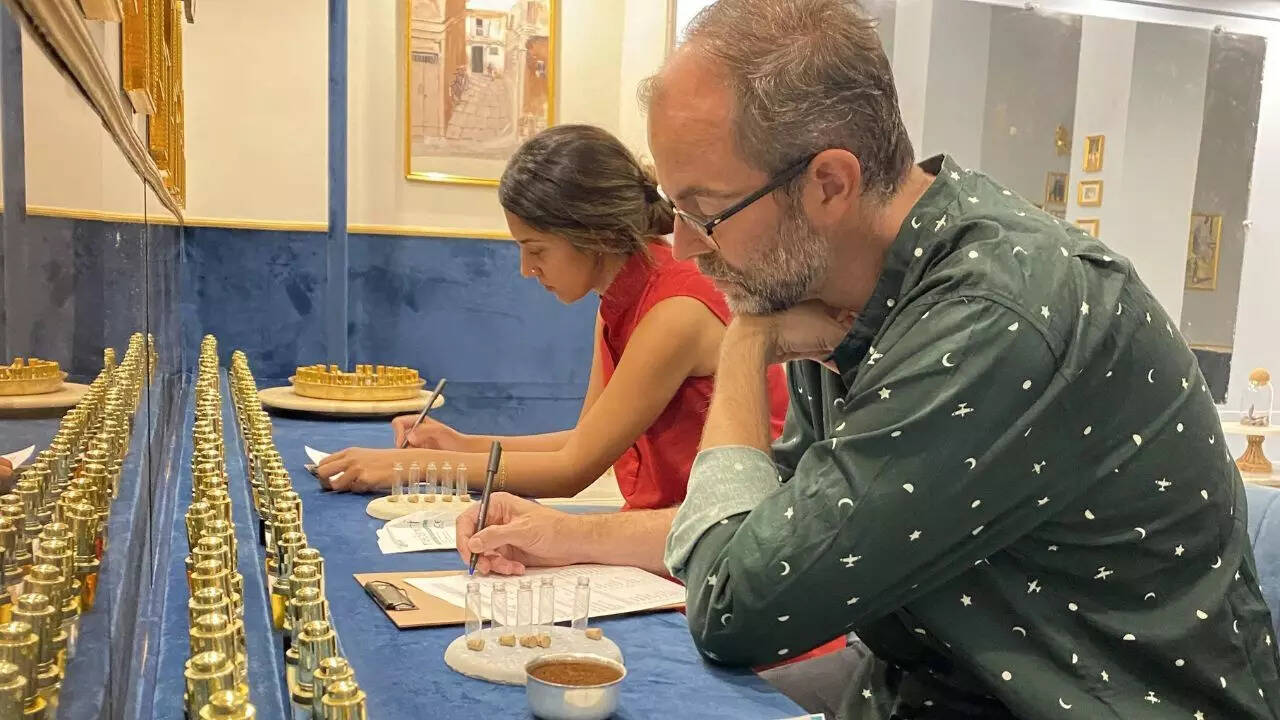
In an era of mass-produced, alcohol-heavy deodorants, Kannauj offers something rare – soul. The city’s fragrances are protected under a Geographical Indication (GI) tag since 2014, recognising that the specific alluvial soil and 3,000-year-old techniques cannot be replicated in a Western lab.
As you walk through the maze of the main market, past vendors selling ruhs (essential oils) and hand-rolled incense, you realise that Kannauj doesn’t just sell a product but preserves a heritage. Whether it’s a drop of rose oil that lingers on the skin for days or a vial of bottled rain that brings back the relief of the first monsoon, these scents offer a depth that modern perfumery often lacks.
February 17, 2026, 14:30 IST

