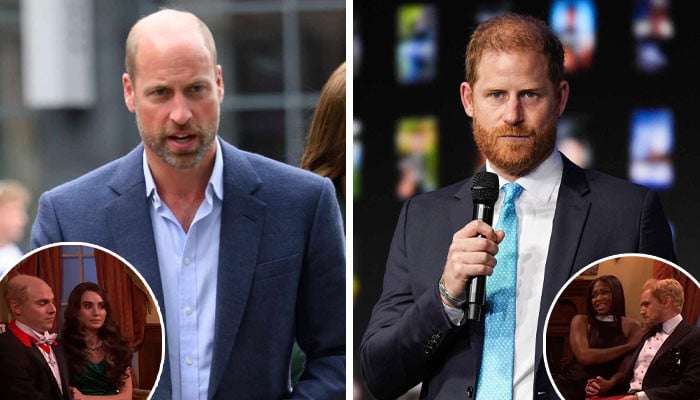
Prince William and Prince Harry are understood to be taken aback by how their family drama is being mocked so blatantly in public.
The royal brothers, who once shared a close relationship, have been estranged for more than three years and while there is speculation about a possible reunion, no official confirmation has been made.
Although, the recent take by British Saturday Night Live sketch has somehow given a wake-up call to the brothers, sources have suggested.
READ MORE: Princes Harry, William brought together by Andrew in SNL UK
In the latest cold open of the comedy sketch show, a scene was reimagined at Sandringham if the two brothers would be reunited during the holidays. The awkward reunion is apparently arranged by the disgraced ex-prince Andrew.
The skit does not spare any character as fodder for comedy and insiders cited by Rob Shuter claim that it has pushed the brothers to take action.
“They’re being laughed at,” the source said. “This is the future King and his brother, not two schoolboys refusing to sit together at lunch. Somebody has to grow up.”
The sources have claimed that talks between Harry and William are being arranged as a first step.
“Harry wants his brother back. William wants Catherine and his children left alone,” the insider added.
“They can rebuild their relationship, but William will not allow his family to become collateral damage again.”
This is not the first time that SNL UK has taken a dig at the royal family. The show, which is on its second season, has written some bold scripts with the royals at the centre.
This would not be the last time that the royals find themselves in such a situation especially as the family drama continues.
READ MORE: ‘SNL UK’ drags Sussex-Royals family drama: ‘Everyone is thinking it’